
From Demo Reels to a Funded Balance: Slots With Real Money
 Best casinos available in IrelandUpdated 7 November 2026



Demo slots and real-money slots are, mathematically, the same game. Almost everything else about them is different. The stake stops being notional, the account acquires paperwork, the bonus terms begin to bind, and the clock on a withdrawal starts running. This page walks the whole transition in order, from the first registration field to the first payout, and it is honest about the part most guides skip: what the arithmetic of a funded session actually looks like, and why speed rather than stake size is the thing that empties a balance.

 300 free spins Claim the bonus 18+ · Bonus terms in the WINSHARK rules
Short answerA no deposit bonus casino offer is bonus money or free spins credited after sign-up, before you pay anything in. You can win real money with it, but only after meeting the wagering, staying under the max bet, passing verification and accepting a cap on what you can withdraw. Our partner WINSHARK does not run a no deposit offer; its welcome deal is +250% on your deposit.
- Formats
- free cash, free spins, free chips, free play
- Between you and a payout
- wagering, max bet, max cashout
- ID check
- usually before the first withdrawal
- Age
- 18+ only
- GRAI online casino licences
- none issued yet (October 2026)
- WINSHARK welcome offer
- +250% on your deposit, a deposit bonus
What changes the moment the balance is real

Nothing about the reels changes. The random number generator is the same, the paytable is the same, the feature triggers fire on the same conditions. What changes is everything wrapped around them, and the list is longer than people expect. Your account becomes a regulated financial relationship rather than a login. Your stake becomes a transaction. Your winnings become a balance with conditions attached. And your session acquires something demo never had: a reason to stop.
That last point is not sentimental. In demo mode the only consequence of a bad run is boredom, so players press on, raise the stake, and treat the credit counter as a scoreboard. The habits learned in that environment are precisely the habits that cost money once the counter is denominated in euro. A player who has spent an hour in demo has not practised playing for real money; they have practised playing without consequence, which is a different skill and an unhelpful one.
The practical structure of the transition is: register, verify, fund, decide the stake, read any bonus terms that now bind, play, and then deal with the withdrawal. Most of the avoidable losses happen because steps two, five and seven are done out of order or not at all. The sections below take them in sequence, and each one isolates the single decision that section is actually asking you to make.
One framing before we start. Slots have a house edge built into the paytable, which means the expected outcome of extended play is a loss. Every piece of advice on this page is about controlling cost, lasting longer, and avoiding the terms that make a bad outcome worse. None of it is about winning, because no stake plan changes the edge.
Demo and real money run the same maths

There is a persistent suspicion that demo slots are tuned to be generous, to hook the player before the money arrives. In a properly licensed environment that is not how it works, and the reason is structural rather than a matter of trust: the game is a single certified build, tested by an independent laboratory, and the operator does not have access to a second set of odds for the free version. Serving a different mathematical model in demo would mean serving an uncertified game, which is the kind of thing that costs a licence.
What creates the illusion is sample size and attention. A demo session is usually short, unmeasured and quickly forgotten when it goes badly. A real-money session of the same length is remembered in detail, because each spin cost something. Human memory weights the two completely differently, and the result is a confident impression of a pattern that does not exist in the data.
There is one genuine difference, and it is not about generosity. Some titles ship in more than one configuration, with different return settings that an operator can select. The version you meet in a demo lobby may not be the version attached to your funded account, and the information panel inside the game is where that is disclosed. Checking it takes seconds and it is the only demo-versus-real discrepancy worth worrying about.
If you want to use demo properly, use it as a rules trainer rather than a luck sample: learn where the feature buttons are, what triggers the bonus round, how the paytable reads. Our free demo slots page explains what demo mode is genuinely good for and the three things it will teach you wrong.
The one thing demo cannot teach you
Variance is a statistical property. Felt variance is a psychological one, and only the second decides what you actually do at spin forty. A twenty-spin dry streak in demo registers as nothing. The same streak against a funded balance registers as a decision point, and the decision most players make is to raise the stake, because raising the stake feels like doing something about it. It is the single most expensive reflex in slot play and demo mode actively trains it.
The mechanism is worth naming precisely. Slots are independent events; the reels have no memory and no obligation to compensate for a dry run. A streak of losses does not make the next spin more likely to pay, and raising the stake after losses does not recover anything, it simply increases the amount at risk during the period when your balance can least afford it. Every stake-escalation system ever written runs into this wall.
The defence is to fix the stake before the session rather than during it, and to write the number down somewhere outside the game. A stake chosen in advance is a budgeting decision; a stake chosen at spin forty is an emotional one. Operators give you tools that enforce this, including loss limits and session reminders, and setting them before the first spin costs nothing and removes the decision from the moment when you are least equipped to make it.
There is a related illusion that demo mode manufactures: the sense that you have seen the game's full range. A free session long enough to be interesting will usually have produced at least one decent bonus round, because people keep spinning in demo until something happens and then stop. That selective stopping creates a memory of the game as a place where features arrive, which is not the same as a measurement of how often they do. The funded version of the same game will feel stingier for no reason other than that you are no longer allowed to keep spinning until it cooperates.
Account first, balance second

Registration for a real-money account is not the two-field form demo play required. You are opening something closer to a financial account, and the operator has obligations that make the questions non-negotiable: legal name, date of birth, address, contact details, and increasingly a declared source of funds for larger accounts. Supplying anything inaccurate here is not a shortcut, it is the thing that will block a withdrawal later, and operators are entitled to void a win if the account details were false.
Two details cause most of the trouble. The name on the account must match the name on every payment instrument you use; a card belonging to a partner or parent will deposit fine and fail at payout. And the address must match the documents you will eventually upload, which sounds obvious until someone registers with an old address because it is the one they remember.
The sequence we recommend is: register, complete verification immediately, and only then deposit. Doing it in that order means the paperwork is resolved while you have no money at stake and no urgency, which is exactly the right time to resolve paperwork. Doing it in the other order means the documents land in a review queue at the precise moment you want to be paid, and the wait feels infinitely longer with a balance hanging on it.
The broader picture of what a funded Irish account involves, including the account-level checks that have nothing to do with slots, is set out on our real money casino guide.
Verification: what it is and when it bites
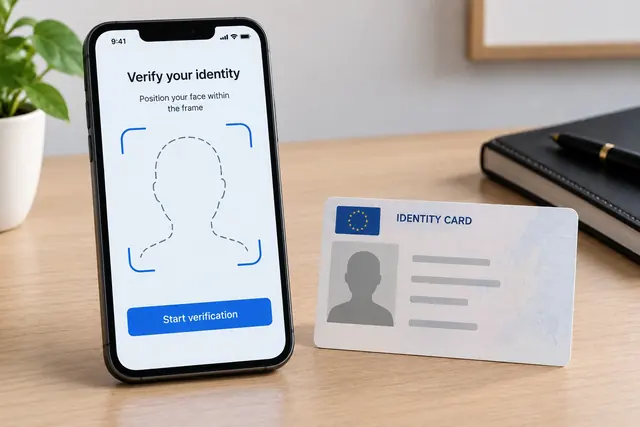
Know-your-customer checks exist because an operator that can hold and pay out money is subject to anti-money-laundering obligations. In practice that means proof of identity, proof of address, and often proof that the payment method belongs to you. The documents are mundane; the timing is the thing that determines whether the process is invisible or infuriating.
Operators sit in two camps. Some verify at or near registration, which front-loads the friction and means your first withdrawal is a payment request rather than an investigation. Others verify at first withdrawal, which keeps the signup smooth and converts your first win into a document queue. If you can tell which camp an operator is in before depositing, that information is worth more than a comparison of their bonus sizes.
There is a category of site that markets itself on minimal verification, and the phrase needs unpacking rather than endorsing. No properly licensed operator can pay out meaningful sums to an unverified account; what these sites usually mean is that the checks are deferred, automated or triggered by thresholds rather than absent. The distinction matters because a deferred check is still a check, and it tends to arrive at the worst moment. Our page on no-KYC claims works through what the phrase can and cannot honestly mean.
Funding the balance: rails ranked by friction

The rail you choose does three jobs at once: it sets how fast the money arrives, it frequently determines how fast a win leaves, and in some cases it decides whether a bonus attaches at all. Most players pick on the first criterion and are then surprised by the second and third. Picking on all three takes about a minute.
Deposits in Ireland are generally instant on cards, fintech accounts, e-wallets and open banking, and slower on manual bank transfer. The interesting differences are on the way back out, where wallets and open banking are quick, cards are slower, and prepaid and phone billing cannot pay out at all. The second interesting difference is bonus eligibility: a number of offers exclude specific e-wallets and prepaid instruments from qualifying, so the rail can quietly disqualify you from the promotion you deposited for.
The amount matters too, but less than people think. Every rail has a floor, set by whichever is higher of the casino's minimum and the provider's. If you are starting small, the rung you land on affects your method choice more than your game choice, and our minimum deposit guide maps which rails pass at which sizes.
| Rail | Deposit speed | Can it pay out? | Bonus eligibility risk |
|---|---|---|---|
| Debit card | Instant once authorised | Yes, often required first | Low |
| Fintech account or card | Instant | Yes, usually fastest | Low |
| E-wallet | Instant | Yes | Frequently excluded from offers |
| Open banking / pay by bank | Instant, with an app approval each time | Yes, to the linked account | Low |
| SEPA bank transfer | Same day to a settlement cycle | Yes | Low |
| Prepaid voucher | Instant | No | Frequently excluded from offers |
| Pay by phone bill | Instant | No | Often excluded |
| Crypto | Network dependent | Yes | Varies widely by operator |
Your deposit sets the stake plan, not your mood
The order of operations that most players use is backwards. They deposit an amount, open a game, and discover the stake that game wants. The order that works is to decide what you want the session to be, derive the stake from that, and then deposit enough to support it. A session is a number of spins at a stake; those two numbers multiply into a deposit, and the deposit is the output rather than the input.
This matters because games have minimum stakes and those minimums vary enormously. Some slots will run at a few cent a spin; others have floors that make a small balance pointless, and many live dealer tables sit well above anything a modest deposit can sustain. If you deposit first and choose the game second, you will end up playing whatever your balance permits rather than whatever you wanted to play.
There is a second reason to work in this direction. A stake derived from a session plan is a number you can defend when the session goes badly, because you set it for a reason. A stake derived from a balance is a number that drifts upwards, because there is always an argument for one slightly bigger spin. Deriving it in advance is the only version of stake discipline that survives contact with a losing run.
Stake sizing, as arithmetic

The base calculation has no uncertainty in it at all: balance divided by stake equals spins, before any returns are counted. Returns during the session extend that count, sometimes substantially on a low-volatility game, but the division is the floor and it is the number that tells you whether your plan is coherent. If you want an hour of play and your stake-to-balance ratio gives you thirty spins, the plan is not coherent and no amount of optimism fixes it.
The chart below runs the division on a hypothetical balance, with hypothetical stakes, to show the shape. The practical lesson is that the relationship is brutally non-linear in how it feels: doubling the stake halves the session, and most players underestimate how quickly a raised stake collapses the time they get. The second lesson is that spin speed multiplies this, which the next-but-one section deals with.
One caveat that catches people with a bonus running. Bonus terms commonly impose a maximum stake while the bonus is live, and that cap may be lower than the stake your plan assumed. Exceeding it can forfeit the bonus and sometimes the winnings derived from it, so the stake plan has to be checked against the bonus terms rather than just the balance.
10c per spin500 spins
20c per spin250 spins
50c per spin100 spins
1 unit per spin50 spins
2 units per spin25 spins
Pure division of an assumed 50-unit balance by assumed stakes. Conditional figures used to show the shape, not a prediction; returns during the session lengthen the count and a bonus max-bet rule may cap the stake.
What the stake actually buys: lines, ways and Megaways

The stake field on a slot is not always a single number, and misreading it is a classic real-money mistake that demo mode never punishes. On older line-based games, the figure you adjust may be the stake per line, and the amount actually leaving your balance is that figure multiplied by the number of active lines. Players who set what they think is a ten-cent spin and find a one-euro deduction have met this directly.
Modern designs mostly removed the ambiguity. Ways-based games use a fixed total stake across all symbol positions, so the number on the button is the number deducted. Cluster-pays games do the same. The variety of mechanics has grown enormously, and each one changes what a single spin is buying: a fixed set of lines, a variable set of ways, or a grid where adjacency rather than lines determines a win.
The mechanic with the widest reel-count variation deserves specific attention, because the number of ways to win can swing dramatically from spin to spin while the stake stays flat. That is a different risk profile from a fixed-line game at the same stake, and it is worth understanding before you fund it rather than after. Our Megaways explainer covers how the variable-reel mechanic works and what it does to the shape of returns.
RTP: published, configured, and long-run

Return to player is a long-run average, and every word in that phrase is doing work. It is a return expressed as a percentage of total stakes, averaged over a sample size far larger than any human session, computed from the game's own paytable and probability model. It is not a promise about your afternoon, and it does not become more likely to apply the longer you play in any timeframe that matters to you.
Two practical complications. First, many titles ship in multiple return configurations, and the operator chooses which one to deploy. The figure quoted in a review may not be the figure attached to the game in front of you, and the only authoritative place to check is the game's own information panel. Second, a high published return does not mean a gentle game: the same percentage can be delivered through frequent small returns or rare large ones, and those two experiences feel nothing alike against a real balance.
That second point is the difference between return and hit frequency, and conflating them is the most common analytical error in slot play. Hit frequency tells you how often a spin returns anything at all; return tells you what proportion of stakes comes back over the long run. A game can return a lot of small amounts and still be expensive, because a return smaller than your stake is still a net loss on that spin. Our payout and house edge page works through how the two interact.
| Concept | What it measures | What it does not tell you |
|---|---|---|
| Return to player | Share of total stakes returned over a very large sample | Anything about your session, or when returns arrive |
| House edge | The complement of return: the structural cost of play | That any individual session will match it |
| Hit frequency | How often a spin returns anything at all | Whether the return exceeds the stake |
| Volatility | How returns are distributed between small and large | The expected total, which is set by return |
| Maximum win | The paytable ceiling, usually as a stake multiple | How likely that ceiling is to be reached |
Volatility against a real balance
Volatility describes the shape of the distribution rather than its total. A low-volatility game returns small amounts often, which keeps the balance ticking over and makes a modest bankroll last longer in clock time. A high-volatility game withholds for long stretches and concentrates its returns into rare, larger events. Both can share the same long-run return percentage while delivering completely different sessions.
The practical rule follows from bankroll rather than preference. High volatility needs a bankroll deep enough to survive the dry stretches long enough for the game's payout pattern to have any chance of expressing itself. If your balance covers a few dozen spins, a high-volatility game will most likely end the session during a perfectly normal dry run, and you will have paid for the risk profile without ever reaching the part that justifies it.
None of this is a route to profit, and it is worth being blunt about that. Choosing low volatility does not reduce the house edge; it spreads the same cost more evenly, which extends the session and makes the losing feel gentler. That is a legitimate thing to want from an entertainment product. It is not an edge, and anybody presenting volatility selection as a strategy for winning is selling you something.
One further wrinkle: volatility is rarely published as a number. Studios describe it in words, or with a one-to-five indicator, or not at all, and the labels are not standardised between providers. One studio's medium is another's high. The reliable signals are structural rather than stated: a very large maximum win as a stake multiple implies the returns are concentrated, a bonus round that triggers rarely implies the same, and a paytable whose top symbols pay enormously more than its low symbols is telling you where the money is. Reading the paytable gives you a better volatility estimate than the marketing label does.
Feature buys exist only on real money
Many modern slots let you purchase the bonus round directly rather than waiting for it to trigger, usually at a stake multiple stated on the button. This is a real-money-only mechanic in most markets, and it changes the economics of a session sharply. You are converting a large chunk of your balance into one high-variance event, and the game's maths is configured so that the purchase price reflects the expected value of the round, less the house edge.
That last clause is the whole analysis. A feature buy is not a discount on the bonus round; it is a priced product with the same edge applied, delivered in a far lumpier way. For a balance of modest size, one purchase can consume the session in a single click, and the outcome is a single draw from a wide distribution. Some players want precisely that. Nobody should want it by accident, which is what happens when the buy button sits next to the spin button.
Worth noting too that bonus terms very often exclude feature buys while a wagering requirement is live, and using one can void the bonus. If you have an active offer, treat the buy button as disabled regardless of whether the interface agrees.
Jackpots are a real-money-only proposition

Progressive jackpot pools are funded by a slice of every real-money stake placed on the game across the whole network, which is why demo play cannot contribute to them and cannot win them. That funding mechanism has a direct consequence for your return: the portion diverted to the pool is part of the published return only in the sense that it comes back to somebody, not necessarily to you. For a player who will never win the pool, a progressive game is a game with a slice of its return permanently out of reach.
There is usually an eligibility condition too, and it is the part most people miss. Many progressives require a maximum stake, a maximum lines configuration, or a side bet in order to qualify for the top tier. On a modest balance that condition is often incompatible with playing more than a handful of spins, which means you can be playing a jackpot game while being structurally ineligible for the jackpot.
The alternatives are worth knowing. Fixed jackpots pay a stated amount with no pool and no eligibility games. Must-drop designs guarantee a payout within a stated window, which changes the timing rather than the odds. The three families behave differently enough that treating them as one category leads to bad choices, and our jackpot slots guide separates them.
A bonus rewrites the rules of your session

Accepting a bonus is not adding money to your balance; it is entering a contract that governs how you may play until the obligation is cleared. That is the single most important thing to understand before clicking accept, and it is why we keep saying read the terms first. Once a bonus is live, your stake ceiling may change, your game choice may be restricted, and your winnings may be capped or non-withdrawable until a turnover figure is met.
The components to identify are always the same. The wagering multiplier and, crucially, the base it applies to: bonus only, or deposit plus bonus. The maximum stake permitted while the bonus is live. The contribution weighting by game category. The list of excluded titles. And the expiry, which may be several different clocks running on the offer, the credit and any winnings separately.
Hypothetically, to show the shape: a twenty-unit bonus at a thirty-times requirement on the bonus alone is six hundred units of turnover. The same multiplier applied to deposit plus bonus, on a twenty-unit deposit, is twelve hundred. Same headline, double the obligation. Those figures are invented to illustrate the mechanism, not quoted from anywhere. The full taxonomy of offers and which terms are red flags is on our casino bonus guide.
Game weighting and the max bet trap
Weighting is how operators stop you clearing a wagering requirement on a low-edge game. Each category contributes a stated proportion of your stake towards the requirement, and the proportions are not arbitrary: games with a thinner house edge contribute less, because clearing a requirement on them would cost the operator money. Slots typically contribute in full, table games a fraction, and some live products nothing at all.
The arithmetic consequence is severe and frequently overlooked. If a category contributes a fraction of each stake, your effective turnover obligation on that category is the requirement divided by that fraction. A requirement that looks moderate on slots becomes enormous on a game weighted at a small fraction, and a game weighted at zero can be played all day without moving the counter at all.
The max bet rule is the companion trap and it is the one that actually voids bonuses. While a bonus is live, the terms specify a ceiling on the stake per spin, and exceeding it even once is a breach. Autoplay with a stake set above the ceiling can breach it repeatedly before you notice, and the usual remedy applied is forfeiture of the bonus and anything won with it. Check the ceiling, set the stake under it, and do not change it mid-session.
| Game category | Typical contribution pattern | Effect on the turnover you must place |
|---|---|---|
| Video slots | Usually the full stake | Requirement as stated |
| Jackpot slots | Often reduced or excluded | Longer, or no progress at all |
| Roulette | Commonly a small fraction | Multiplies the stated requirement |
| Blackjack and other low-edge tables | Commonly a small fraction or zero | Can make the requirement unclearable |
| Live dealer tables | Frequently excluded | No progress; play anyway and you may breach terms |
| Feature buys | Usually prohibited while a bonus is live | Risk of forfeiting the bonus entirely |
Free spins credited to a funded account

Once you are playing for real money, spin packages become a recurring part of the relationship: welcome spins, reload spins, daily or weekly drops, spins awarded for hitting a wagering milestone. They are cheap for an operator to issue and genuinely useful to a player, provided you read the two numbers that determine their value rather than the one on the banner.
The headline is the spin count and it is the less informative half. The value of a package is the per-spin stake value multiplied by the count, and the stake value is set by the operator, typically at or near the game's minimum. A large package of minimum-value spins and a small package of higher-value spins can be worth similar amounts, and the banner will always lead with whichever number looks bigger.
Then there are the conditions on what the spins win. A wagering requirement on spin winnings means turning them over before they convert. A winnings cap truncates the result regardless of how the spins went. The two are independent, so a package can be wager-free and capped, which is the configuration that reads best and pays least. How to value a package properly, including the arithmetic of caps, is on our free spins guide.
The wager-free alternative

There is a small category of offer with no turnover obligation at all: whatever the bonus or the spins produce is yours as cash, immediately withdrawable. It exists because some operators have decided that a clean promise converts better than a large one, and it is the only bonus shape we would describe as unambiguously good for the player.
The trade is size. A wager-free offer is almost always smaller than a wagered one, because the operator is giving away something with no mechanism to recapture it. Players comparing headline figures will reject it on sight, which is exactly why it survives: the comparison most people run is the wrong one. A smaller amount with no obligation is frequently worth more than a larger amount behind a turnover requirement that most players never clear.
Caps still apply, and they are where the fine print lives. A wager-free package with a tight winnings cap is a modest, certain, bounded benefit, which is still better than an uncertain obligation but is not the unlimited upside the absence of wagering implies. Our no wagering comparison sets out what you give up in size and when the trade is worth taking.
Speed is the risk multiplier, not stake
This is the section most slot guides omit and it is arguably the most important. Your cost per hour is stake multiplied by spins per hour multiplied by the house edge. Players obsess over the first term and ignore the second, yet the second is the one the interface is designed to maximise. Turbo mode, quick spin, skipping animations and autoplay all do the same thing: they increase the number of times per hour the edge is applied to your money.
Doubling spin speed has the same effect on hourly cost as doubling the stake. Nobody would casually double their stake, and almost everybody casually switches on turbo. The asymmetry exists because the stake is a number you chose and the speed is a convenience toggle, so one feels like a decision and the other does not. Both are decisions with identical arithmetic consequences.
Autoplay compounds it by removing the decision point entirely. A hundred automatic spins is a hundred applications of the edge with no opportunity to notice how the session is going, and it is also the mechanism by which max-bet breaches happen unnoticed. If you use autoplay, use the loss limit and single-win stop conditions it offers, because those turn it from a cost accelerator into something with brakes.
Deliberate play, animations onbaseline
Normal paceabout half again
Quick spin enabledroughly double the baseline
Turbo enabledclose to triple
Autoplay at turbomaximum exposure per hour
Relative, conditional figures invented to show the proportion, not measured spin rates. The point is the ratio: cost per hour scales with spins per hour exactly as it scales with stake.
Mobile sessions behave differently

Most real-money slot play in Ireland happens on a phone, and the device changes behaviour in ways that have nothing to do with the game. A phone session is shorter, more frequent and more likely to be started in a gap rather than planned, which means the stake and limit decisions that are easy to make deliberately at a desk get skipped entirely. The same player spends differently on the same game depending on the screen.
There are interface consequences too. The stake adjuster is smaller and easier to mis-tap, the information panel with the return configuration is buried behind a menu, and bonus terms are rendered in a scroll that nobody reads to the end. None of that is deceptive by design, but the net effect is that the checks this page recommends are materially less likely to happen on mobile.
The practical fix is to do the setup on whatever screen you find comfortable and the playing wherever you like. Set the deposit and loss limits, read the bonus terms and check the game's information panel once; those settings persist across devices because they live on the account. Our mobile casino page covers app versus browser, what persists between them, and the interface traps worth knowing.
Choosing which slots to start with

The sensible starting filter has three criteria and none of them is the theme. First, a minimum stake your balance can sustain for the session length you planned. Second, a volatility profile that matches that balance, which for most modest bankrolls means avoiding the high end. Third, a published return you have verified in the game's own information panel rather than in a review.
After that, mechanics matter more than graphics. A fixed-line game, a ways-based game and a cluster game produce different session shapes at the same stake, and knowing which you are playing stops the paytable surprising you. Reading the paytable once before the first real spin is five minutes that pays for itself, because it tells you what the features actually do rather than what the trailer implied.
Where to look for candidates: the lobby's own sorting is marketing, so prefer a filter you control. Sorting by provider is more informative than sorting by popularity, because a provider's catalogue tends to share conventions, and once you know one of their games you can read the rest quickly. Our Irish slots overview groups the main types and explains which suits which bankroll.
Taking a win out: the route, the pending period, the reversal

A withdrawal is not one event, it is three. First the request, which you submit. Then the review, in which the operator checks verification status, bonus status and anything unusual about the play pattern. Then the payment, which runs at the speed of the rail. Marketing copy about instant payouts almost always refers to the third stage only, and the second stage is where the time actually goes.
Return-to-source rules mean the first payout is often pushed back to the method you deposited with, regardless of what you would prefer. That is an anti-money-laundering convention rather than an inconvenience invented by the operator, but it does mean your deposit choice constrains your payout choice. If speed matters, deposit by a rail that can also pay you.
Then there is the pending period, and it deserves a warning. Some operators hold a requested withdrawal for a stated interval during which you can cancel it and return the funds to your balance. That facility exists for your convenience and functions, in practice, as a trap: a pending withdrawal visible next to a game lobby is an invitation to reverse it and keep playing, and the money that gets reversed is very often the money that never leaves. If the operator offers a setting to disable reversals, enable it. Which rails are genuinely fast in Ireland is covered on our fast withdrawal page.
| Stage | What happens | What determines the duration |
|---|---|---|
| Request | You submit the withdrawal in the cashier | Instant, unless a bonus obligation blocks it |
| Review | Verification, bonus and risk checks | Whether you were verified in advance |
| Pending window | A cancellable hold, where offered | Operator policy, and whether you disabled reversals |
| Payment | Funds leave for your rail | The rail: wallets fastest, cards slower, transfer slowest |
| Arrival | Funds land in your account | Your own provider, outside the operator's control |
Disconnections, unresolved rounds and game history

Here is a problem demo play never presents: the connection drops mid-spin, or mid-bonus-round, and real money is sitting in an unresolved game state. It happens more often than anyone admits, usually on mobile, usually at the worst possible moment, and the thing to know is that the outcome is already determined server-side before your screen renders it. The result of a spin is not computed by your handset; it is computed by the game server and then animated for you.
That architecture is what protects you. A spin that was accepted by the server has a result, and reopening the game reloads the unresolved round rather than discarding it. If the round was a bonus feature, you should land back inside it with the remaining free spins intact. If the connection dropped before the stake was accepted, nothing was deducted. The failure mode to worry about is the ambiguous middle, where you cannot tell which of those two happened.
That is what game history is for, and it is the single most underused feature in any real-money account. Every licensed game keeps a per-round log, usually reachable from the game menu or the account area, showing the stake, the result and the timestamp of each round. It is the authoritative record, it outranks your memory and your screenshot, and it is the first thing a support agent will ask for. Learn where it lives before you need it.
If a round genuinely cannot be resolved, the route is a support ticket citing the round identifier from that log, then the operator's published complaints procedure, then the independent dispute service named in the licence conditions. That escalation chain only works if you have the round identifier, which is another argument for finding the history panel on a calm day rather than an angry one.
Records, tax and what this page will not tell you
Keep a record. Not for tax reasons in the first instance, but because a written log of deposits, withdrawals and session lengths is the only reliable defence against the mental accounting that makes gambling feel cheaper than it is. Memory systematically remembers wins and forgets deposits, and a spreadsheet does not. Most cashiers also provide a downloadable account history, which is easier than keeping your own and harder to argue with.
On tax, we are not advisers and will not pretend otherwise. The general position for a recreational player in Ireland is that winnings are not treated as income, with the duties in the sector falling on operators rather than customers. Anything beyond the plainly recreational case, including play at a scale or regularity that might be characterised differently, is a question for Revenue or a qualified accountant rather than a casino guide, and we would rather say that than guess.
What a record does help with concretely is the source-of-funds question. If an operator or a bank asks how a sum arrived, a clean history of deposits and withdrawals answers it in minutes. Without one, the answer takes weeks and involves people you did not want to involve.
Licensing: who stands behind the reels

The reason you can take a published return figure seriously at all is that somebody tested it. Game studios submit builds to independent laboratories, which verify the random number generator and confirm the return matches the stated model. An operator deploys the certified build, and a regulator can audit that it did. Remove any link in that chain and the number on the information panel is marketing.
Ireland's framework is being rebuilt. The Gambling Regulation Act 2024 established the Gambling Regulatory Authority of Ireland, which is taking up its functions in phases rather than all at once. Several parts of the Act, including the Part 6 regime on advertising, promotion and inducements, are enacted but not yet commenced, so they are not yet operative obligations you can hold a promotion against. The Authority publishes its own progress and remit, and that is the primary source worth checking rather than any secondary summary.
In the meantime, the protections that matter to a slot player are the ones a licence actually delivers: certified games, segregated player funds, a published complaints path and access to an independent dispute service. All four are checkable from an operator's own footer, and the checks take minutes. Our page on spotting a legitimate site walks through them in order, including the warning signs in terms and conditions that are worth more than any rating.
Session hygiene: the settings worth more than any strategy

Every properly licensed cashier has a set of player-protection tools, and they are the only genuinely effective intervention available to you, because they work on the one variable you control: exposure. A deposit limit over a period caps the sequence rather than the instance, which is what actually matters, since the damage at any stake level is done by repetition. A loss limit caps the outcome. A session reminder interrupts the drift that long sessions produce.
Set them before the first spin, not after a bad one. A limit set in advance is a budget; a limit set after a loss is a reaction, and operators often impose a cooling-off period before a limit can be loosened precisely because the request to loosen it usually arrives at the worst moment. That delay is a feature. Time-out and self-exclusion exist above the limits, and using them is the system working rather than failing.
If play has stopped being an occasional expense and become something else, Ireland has free, confidential support that is independent of any operator, and the honest thing for this page to do is point there rather than at another game. Our responsible gambling page lists the Irish helplines and explains what each tool does and how to switch it on.
A plan for your first real-money session

Put the whole page into an order you can execute. Register and complete verification before depositing anything, so the paperwork is done while nothing is at stake. Decide the session: how long, at what stake, and therefore what deposit. Set a deposit limit and a loss limit that match that decision, and disable withdrawal reversals if the option exists.
Then choose the rail, checking that it can pay out and that it is not on any excluded-methods list for an offer you want. Read the bonus terms before accepting anything, and specifically find the wagering base, the max bet ceiling and the expiry clocks. If the terms are unclear, decline the bonus; a clean balance is worth more than an obligation you do not understand. Open the game, check its information panel for the deployed return configuration, set the stake under any bonus ceiling, and leave turbo and autoplay off.
Play the session you planned. Stop when it ends, whether it ended well or badly, because a plan that only applies when losing is not a plan. If there is a withdrawable balance, request it and leave it alone. And hold the frame that makes all of this coherent: slots are an entertainment expense with a known structural cost, not an income strategy. Every piece of advice above is about controlling that expense, and none of it changes the edge.
Frequently asked questions
Are demo slots and real money slots the same game?
Mathematically, yes. A licensed operator deploys a single certified build tested by an independent laboratory, and it has no access to a second set of odds for the free version. The one real discrepancy worth checking is that some titles ship in more than one return configuration, and the version in a demo lobby may not match the one attached to your funded account. The game's own information panel is the authoritative place to confirm it.
How much do I need to start playing slots for real money?
Work backwards rather than forwards. Decide the session you want, pick a stake the games you like will accept, multiply the two, and that is your deposit. Depositing first and choosing a game second means playing whatever the balance permits. Deposit floors are set by whichever is higher of the casino's minimum and the payment provider's, so the rail you pick also affects the smallest amount you can start with.
Do I have to verify my identity before playing slots for real money?
Before withdrawing, certainly, and often before depositing. Verification means proof of identity, proof of address and sometimes proof that the payment method is yours. Operators differ only on timing: some check at registration, some at first withdrawal. Front-loading it is better, because a document queue on a win you want paid feels far longer than the same queue on an empty account.
Does a higher RTP mean I will lose less?
Over an enormous sample, yes, by definition. Over your session, it tells you very little. Return to player is a long-run average computed from the paytable, and it says nothing about when returns arrive. The same percentage can be delivered as frequent small returns or rare large ones, which is volatility, and the two feel nothing alike against a real balance.
What is the difference between RTP and hit frequency?
Hit frequency is how often a spin returns anything at all; return to player is what proportion of total stakes comes back over the long run. They are independent, and confusing them is the commonest analytical error in slot play. A game can return something on most spins and still be expensive, because a return smaller than your stake is still a net loss on that spin.
Should I take the welcome bonus when I start playing for real money?
Only after reading three things: the wagering multiplier and the base it applies to, the maximum stake permitted while the bonus is live, and the expiry clocks. A multiplier on deposit plus bonus is roughly double the obligation of the same multiplier on bonus alone, and nothing on the banner distinguishes them. If the terms are unclear, decline; a clean balance beats an obligation you do not understand.
Why is my bonus not clearing when I am playing a lot?
Almost certainly game weighting. Each category contributes a stated proportion of your stake towards the requirement, and low-edge games contribute a fraction or nothing at all. Your real obligation on such a game is the requirement divided by that fraction, which can make it effectively unclearable. Check the weighting table in the terms before choosing what to play the bonus on.
Can turbo mode or autoplay cost me money?
Yes, and more than most players realise. Cost per hour is stake multiplied by spins per hour multiplied by the house edge, so doubling the spin rate has the same effect as doubling the stake. Autoplay adds a second risk: with a stake set above a bonus max-bet ceiling it can breach the terms repeatedly before you notice, and the usual remedy is forfeiture of the bonus and anything won with it.
Can I win a progressive jackpot playing in demo mode?
No. Progressive pools are funded by a slice of real-money stakes across the network, so demo play neither contributes nor qualifies. Even on real money there is usually an eligibility condition, often a maximum stake, maximum lines or a side bet, which means you can be playing a jackpot game while being structurally ineligible for its top prize. Check the condition before assuming you are in.
How long does it take to get slot winnings paid out in Ireland?
A payout has three stages and the marketing usually describes only the last. The request is instant, the review depends mostly on whether you were verified in advance, and the payment runs at the speed of the rail: wallets fastest, cards slower, bank transfer slowest. Where a cancellable pending window exists, disable reversals if you can, because a reversible withdrawal is very often one that never leaves.
Are slot winnings taxed in Ireland?
We are not tax advisers and will not pretend to be. The general position for a recreational player is that winnings are not treated as income, with the duties in the sector falling on operators rather than customers. Anything beyond the plainly recreational case belongs with Revenue or a qualified accountant, not a casino guide. Keeping your own record of deposits and withdrawals makes any such conversation vastly shorter.
Is there a stake strategy that beats slots?
No. Spins are independent events, the reels have no memory, and no stake pattern changes the house edge built into the paytable. Raising the stake after losses increases the amount at risk exactly when the balance can least afford it. Stake sizing is a budgeting tool: it decides how long the money lasts and how the losing feels, not whether the money is lost.
Read next
More in Bonuses
Casino free spins50 free spins100 free spinsCashback casinoCasino bonus codes
300 free spins Claim the bonus 18+ · Bonus terms in the WINSHARK rules