18+. Welcome bonus “+250% on your deposit” as communicated by the partner to the site owner. Availability depends on your country and eligibility. Bonus structure, maximum amount, qualifying deposits, wagering requirements, eligible games, maximum bet, expiry and withdrawal limits are set out in the operator’s current terms – they are not listed here. We do not guarantee withdrawal times or availability in your country. Offshore operator, not licensed by the Gambling Regulatory Authority of Ireland. Gambling involves financial risk.
Short answerThe short answer on online casino Ireland in 2026: pick the site by its cashier, deposit with a debit card, Revolut or a bank payment you can also withdraw to, and verify your account before you win. GRAI is not issuing online casino licences yet, with gaming licences due to open throughout 2027 and 2028, so no casino site holds one today. Our top pick is 22BET with +250% on your deposit, an offshore operator without a GRAI licence, so read its terms first.
Slots, Megaways, jackpots, crash games and the classic tables: rules, provider RTP figures and where to play for free or for real money.
Online casino Ireland: start at the till, not the lobby
Most players pick an online casino the wrong way round. They see a busy game lobby or a big headline bonus, sign up in two minutes and only meet the cashier when they want to deposit, or worse, when they want their winnings back. CasinoTill works the other way. We start at the till: which payment methods a site really accepts from an Irish account, what the smallest deposit is, how a withdrawal gets approved and how long the money takes to land back in your Revolut, AIB or Bank of Ireland account. Only then do we look at the bonus, the games and the extras.
This page is the long version of that approach to choosing an online casino in Ireland. The first half covers what Irish casino sites look like in 2026, how we rate them, what the law now says, how to pick a site, every common payment method, minimum deposits from €1, fast and instant withdrawals, verification, bonuses with real maths and our current top pick, with a step-by-step first deposit. The second half moves on to the online casino games Ireland players search for most, from slots and live dealers to table and crash games, plus mobile play, safety and responsible gambling.
A quick word on who is talking. CasinoTill is an independent guide written for players in Ireland, and how the site works and is funded is set out on our about us page. What we can do is save you the expensive lessons: the card deposit that cannot be withdrawn to, the bonus that locks your balance, the verification request that arrives the day you win.
What an Irish online casino looks like in 2026
Open any modern Irish online casino and you will find the same building pieces, whatever the logo. There is a lobby of online slots sorted by provider and theme, a live casino with real dealers streamed from a studio, a corner for table games such as roulette, blackjack and baccarat, and a section of quick instant games like Aviator, Plinko and Mines. Many sites also bolt a sportsbook onto the same account, so one balance pays for a spin on a slot and a bet on the Six Nations. The mix of internet casino games is much the same from site to site, because most lobbies use the same studios; what really differs is the till.
What has changed most is the money side. Players in Ireland now move money with a phone in one hand. Revolut, Apple Pay and Google Pay sit next to Visa and Mastercard debit cards, open banking payments go straight from your bank app, and e-wallets, vouchers and crypto fill the gaps. Everything is in euro for an Irish account, so there is no reason to accept a currency conversion on a casino deposit.
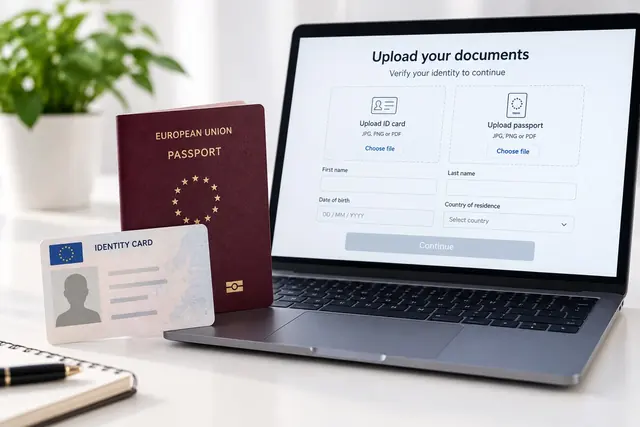
Verification has moved online too. Instead of posting documents, you upload a photo of your passport or driving licence and a recent bill or bank statement, and some sites ask for a selfie. A good online Irish casino asks for this early and tells you exactly what it needs. The weaker ones wait until you request a payout, which is where many complaints about online casino Ireland withdrawals begin.
The table below is a simple map of a casino account. If you know what each part is for, you know where to look before you deposit a cent.
The parts of a casino account and what to check first
Part of the site
What it does
What to check before you deposit
Lobby
Lists slots, live tables, table games and instant games
Whether the games you play are there and whether the info screen shows the RTP
Cashier
Handles deposits and withdrawals
Methods for Irish accounts, euro support, fees and whether you can withdraw with the method you deposit with
Bonus wallet
Holds bonus funds and free spin winnings separately
Wagering, maximum bet, eligible games and expiry date
Verification centre
Collects ID and proof of address
Which documents are accepted and whether you can upload them before your first withdrawal
That limits can be set in a few taps and take effect straight away
Support
Live chat, email, help centre
Opening hours and a straight answer to a question about withdrawals
How we rate casino sites: the CasinoTill criteria
We judge every Ireland online casino by the same list, and we weight it the way an experienced player would. The cashier and the withdrawal process come first, because a casino that is slow or awkward to pay out is a bad casino no matter how many slots it has. Bonus terms come next, then licence and transparency, then the things every big site has in some form: games, mobile play and support.
We give weights in words rather than invented percentages. An overall score out of ten looks precise, but it hides the judgement behind it. Telling you that withdrawals matter more than the number of slots, and why, is more useful. Where something cannot be checked from the published terms, cashier pages or provider information, such as how a site handles a very large payout, we say so rather than guess.
Use the table as your own checklist too. If a site fails one of the top rows, a generous bonus or a famous game in the lobby does not make up for it. That is what separates a good online casino Ireland players can rely on from one that only looks good.
How CasinoTill rates an online casino
Criterion
Weight
What we check
Why it matters
Cashier and payment methods
Very high
Methods available to Irish accounts, euro balance, fees shown before you confirm, the same method for deposit and withdrawal
The cashier decides how cheaply and quickly your money moves in both directions
Withdrawals
Very high
Pending period, approval time, limits, whether a withdrawal can be reversed, how long the money takes to arrive
A casino is only as good as its payout
Verification (KYC)
High
When documents are requested, what is accepted, how long checks take, whether you can verify before playing
Late verification is a frequent reason a payout stalls
Bonus terms
High
Wagering, maximum bet, game weighting, expiry, maximum cashout, how clearly the terms are written
The headline percentage means little without the conditions behind it
Licence and transparency
High
Who runs the site, which licence it holds, whether company details and terms are easy to find
It tells you who is responsible for your money and where to complain
Responsible gambling tools
High
Deposit limits, time-outs, reality checks and self-exclusion that work in a few taps
Good tools are a sign of a site that wants customers for the long run
Games and providers
Medium
Range of slots, live tables and table games, RTP shown in the game info
Important, but most big sites share the same studios
Mobile experience
Medium
Browser site or app, full cashier on mobile, document upload from the phone camera
Many players deposit and play from a phone
Customer support
Medium
Live chat hours, speed and quality of answers to a withdrawal question
You need support most when money is stuck
How to test an online casino yourself, step by step
A rating is only as good as the checks behind it, and the most revealing ones need your own account. The routine below is deliberately boring and repeatable: read, register, deposit small, play, withdraw, ask questions, recheck. Run it with a small deposit of your own before you trust any casino with real money, and it will tell you more than any list of logos.
The point of the small first deposit is not to win. It is to see the whole circle of money working at low cost: how the deposit is charged, whether the balance appears at once, and above all how the withdrawal is handled. If a site makes a small payout difficult, it will not make a big one easy.
Read the terms before registeringOpen the general terms, the bonus terms and the withdrawal or payments policy. Look for pending periods, withdrawal limits, fees, dormant account charges and which documents verification needs.
Register with your real detailsUse your legal name, date of birth and Irish address exactly as they appear on your ID and bank account. A mismatch here is a common cause of later delays.
Deposit a small amount with a common methodRevolut or a Visa or Mastercard debit card are the easiest test. Note any fee the cashier shows and how quickly the balance appears.
Play a few short sessionsTry a slot, a live table and a table game. Open the info screen and check whether the RTP is shown and matches the version you expected.
Request a withdrawal and time each stageWrite down when the request was pending, when it was approved and when the money arrived. Those three times are the real payout speed.
Ask support two questionsOne about withdrawal times and limits, one about setting a deposit limit. Clear, quick answers are a good sign; copy-and-paste replies are not.
Recheck after changesTerms, methods and bonus rules change. A site that was good last year needs a fresh look before it keeps its place on your list, and new online casinos deserve the full test before you trust them with more than a small deposit.
Is online casino legal in Ireland? The 2026 picture
Ireland is in the middle of the biggest overhaul of its gambling law in decades. The Gambling Regulation Act 2024 (No. 35 of 2024) replaces a patchwork of old statutes with one framework and one regulator. Citizens Information describes the old system as resting on several older laws, with some newer forms of betting and gaming not covered by any regulation at all. The new Act is being switched on in phases, section by section, so the honest answer to “what does the law say about an online casino in Ireland” depends on the date you ask.
For online players the key date was 5 February 2026. From then the Gambling Regulatory Authority of Ireland (GRAI) could accept applications and issue betting licences, and a first set of player protections came into force for licensed operators: a ban on accepting credit card payments, a duty to offer spending limits, a duty not to unreasonably withhold winnings, a ban on gambling by anyone under 18 and new rules for remote accounts. The first GRAI remote betting licences followed from 1 July 2026.
Online casino games are a different story. The licence that will cover them, the Remote Gaming Licence, is written into the Act and authorises a licensee to provide relevant games by remote means, and GRAI still has to settle which games count as relevant games. GRAI says applications for the remaining licence types, including gaming, will open throughout 2027 and 2028. So as of October 2026 no operator holds a GRAI licence for them, because those licences are not being issued yet.
What does that mean for you? Mainly that the protections in the new law depend on who you play with. GRAI states that the Act’s obligations apply to an operator once it holds a GRAI licence, on a phased basis. A casino without a GRAI licence follows its own terms and whatever licence it holds elsewhere, if any. Read those terms with that in mind, and use the practical habits in the rest of this guide: debit methods only, verification early, regular withdrawals and limits you set yourself.
GRAI: what the Gambling Regulatory Authority of Ireland does
GRAI, in Irish Údarás Rialála Cearrbhachais na hÉireann, was formally established on 5 March 2025. It is the single body that will license and supervise gambling in Ireland, online and in person, taking over work that used to be split between Revenue, An Garda Síochána and the District Courts.
Its powers have teeth. Under the commencement order that took effect on 5 February 2026, GRAI can impose administrative sanctions of fines of up to €20 million or 10% of a licensee’s turnover, whichever is greater, and it can ask the courts to order an illegal operator to stop. The same order brought in the enforcement and complaints machinery and repealed two very old laws, the Totalisator Act 1929 and the Betting Act 1931.
The handover from the old system is still running. Revenue no longer issues the Remote Bookmaker’s Licence: from 5 February 2026 GRAI is the licensing authority for all forms of betting licence, while operators still pay Betting Duty. Retail bookmaker’s licences issued by Revenue run to 30 November 2026, and GRAI in-person betting licences take over from 1 December 2026. Until the relevant sections commence, the old bodies keep some roles: the Revenue Commissioners for gaming licences, An Garda Síochána for gaming and lottery permits and the District Courts for lottery licences. The Gaming and Lotteries Act 1956 has not been repealed yet.
GRAI also publishes a public register of licence holders that anyone can filter and download. In mid-October 2026 the business-to-consumer filter showed 39 entries, all betting operators, with names such as Betway Limited, Kwiff Limited, QuinnBet (Gibraltar) Limited and Bar-One Racing Limited. The number changes as new licences are granted, so check the live register rather than any list, including ours.
The Gambling Regulation Act 2024: what is in force and what is still to come
A law that commences in stages is easy to misread. Headlines about a ban on bonuses or a national self-exclusion register describe what the Act contains, not necessarily what applies today. The table below follows the commencement table on the Irish Statute Book, updated to 6 October 2026, and translates each line into what it means at the till.
Alongside the Act, three sets of regulations have been made: the Licensing of Gambling Activities Regulations 2026 (S.I. No. 38 of 2026), the Complaints Procedures Regulations 2026 (S.I. No. 170 of 2026) and the Verification of Identity and Age Regulations 2026 (S.I. No. 315 of 2026). For licensees, they set the rules for applying, for handling complaints and for checking who a customer is and that they are over 18.
Key sections of the Gambling Regulation Act 2024, status in October 2026
Rule
Section
Status
What it means for you
Ban on accepting payment by credit card or giving credit, including digital wallets loaded from a credit card
s. 165
In force since 5 February 2026
Licensed operators cannot take your credit card; use a debit card or a bank payment
Duty to offer a monetary limit; it cannot be removed or raised during the limit period
s. 164
In force since 5 February 2026
A licensed operator must let you set a spending limit that sticks
Winnings must not be unreasonably withheld
s. 155
In force since 5 February 2026
A licensee cannot sit on a payout without good reason
No gambling by anyone under 18; protection of children online
s. 158, s. 174
In force since 5 February 2026
Age checks come before play
Remote accounts: register of account holders, opening and closing accounts, terms, information for players
ss. 166–175
In force since 5 February 2026
Clear terms, and your account closed when you ask
Power for GRAI to cap deposits by regulation
s. 170
Section in force, no regulation made yet
No legal deposit cap yet
Power for GRAI to restrict remote gambling on certain days or at certain hours
s. 175
Section in force, no regulation made yet
No legal time restriction yet
Advertising rules, including a TV and radio watershed between 5:30 a.m. and 9:00 p.m.
ss. 143–151
Not yet in force
Ads still run under the old rules
Ban on inducements such as bonuses and free bets
s. 157
Not yet in force
Welcome offers are still common
Sponsorship rules
s. 159
Not yet in force
No change yet
National Gambling Exclusion Register
ss. 44–49
Not yet in force
No single national self-exclusion yet; use each site’s tools
Irish licence or offshore casino: what changes for you
Put the two sides together and the Ireland casino online market in October 2026 looks like this. Sports betting has a licensed lane, with GRAI remote betting licences issued since July 2026. Online casino games do not have one yet, because the Remote Gaming Licence is not being issued. Anyone who plays slots, live roulette or blackjack online today does so at a site that holds no GRAI licence for those games.
We are upfront about this because our own top pick, 22BET, sits in the second column of the table below: it is an offshore operator without a GRAI licence. That does not make a site good or bad by itself, but it changes who you can turn to and which rules protect your money. Not all Irish casino sites are equal on this, so read each operator’s terms, look up its company details and keep your habits tight.
The habits that matter most are simple. Keep your balance small and withdraw winnings regularly instead of letting them sit. Verify your account before you need a payout. Pay with a debit card, Revolut, a bank payment or an e-wallet funded from a debit card, never with credit. And set your own deposit limit, both in the casino account and, if you want a hard stop, with the gambling block that Revolut and PTSB offer in their apps or that AIB and Bank of Ireland set up by phone. Details are on our responsible gambling page.
GRAI-licensed operator compared with a casino without a GRAI licence
Topic
GRAI-licensed operator
Casino without a GRAI licence
What it can offer now
Betting, under remote betting licences issued since 1 July 2026
Casino games, often with a sportsbook on the same account
Credit cards
Banned under s. 165, including wallets loaded from a credit card
Set by the operator; use a debit method anyway
Spending limits
Must offer a monetary limit under s. 164
Depends on the site; look for limits in account settings
Paying winnings
Must not unreasonably withhold winnings under s. 155
Governed by the site’s own terms
Identity and age checks
Verification of Identity and Age Regulations 2026
Set by the site’s terms; often triggered by the first withdrawal
Complaints
Complaints Procedures Regulations 2026 and GRAI enforcement
The operator’s own complaints process and its home licence, if any
Closing your account
Must close the account on request
Check the terms before you deposit
How to choose a casino site in Ireland: the checklist
A search for casino online Ireland brings up hundreds of sites that look alike, so choosing among casino sites in Ireland is easier when you decide what you need before you look at what is on offer. Someone who deposits €10 a week with Revolut and plays slots on the bus needs a different site from someone who wants live blackjack on a laptop and fast bank payouts. Write down your main payment method, your usual deposit and the games you actually play, then run every candidate through the list below.
If a site passes all of it, the bonus becomes a tie-breaker rather than the reason to join. That is the right order. Our best online casino Ireland ranking and the wider list of casino sites in Ireland are built on exactly these questions.
Your payment method is in the cashier for withdrawals as well as deposits. Many sites accept a method one way only.
The account runs in euro. No currency conversion on deposits or payouts.
Fees are shown before you confirm. Both on deposits and on withdrawals.
The withdrawal policy is published in plain words: pending period, processing time, limits per transaction and per month.
Verification is explained up front, with a list of accepted documents and a way to upload them before your first payout.
The bonus terms are short and specific: wagering, maximum bet, game weighting, expiry and any cap on winnings.
Deposit limits and time-outs can be set in the account in a few taps.
The operator is named, with a licence and company details you can check.
Support answers a direct question about withdrawals with a direct answer.
The mobile site or app has the full cashier, not a cut-down version that sends you back to a laptop.
Red flags: when to close the tab
Some warning signs are worth leaving a site over straight away, however you found it: an ad, a friend’s tip or a search for casino Ireland online. None of them needs special knowledge to spot, and each one has cost Irish players real money. The full guide to spotting rogue operators is on our safe online casino page; the short list is here.
No operator name, no licence details and no company address anywhere on the site.
Bonus terms that are missing, vague or only available after you deposit.
A withdrawal method list that is much shorter than the deposit list, with no explanation.
Requests to pay a fee or a tax up front before a withdrawal can be released.
Support that asks for your card PIN, full card number by chat or online banking login.
Promises of guaranteed winnings, secret systems or no-lose strategies.
Payment methods at Irish casinos: the full comparison
The cashier is where an Irish casino online either earns your trust or loses it. Deposits are the easy half: almost every method credits your balance within moments. Withdrawals are where methods differ, because not every method that takes money in can send it back out, and the route the casino uses to pay you decides how fast the money really arrives.
Start with one rule that applies everywhere. Casinos usually pay winnings back to the method you deposited with, as far as they can, and only then by another route such as a bank transfer. So choose your deposit method with the withdrawal in mind. A pay-by-phone deposit, for example, can never be paid back to your phone bill, which means you will need a second method set up and verified before you can cash out.
The table compares the methods Irish players search for most. Each one has its own full guide, and our casino payment methods hub puts them side by side with deposit and withdrawal notes for each.
Casino payment methods for players in Ireland
Method
Deposits
Withdrawals
Worth knowing
Full guide
Revolut
Yes, with the Revolut debit card or a bank payment
Often back to the card or account, depending on the casino
Irish branch with an IE IBAN; an in-app gambling block is available for self-control
Revolut is the app a huge share of Irish players already have on their phone, and for Irish residents it now runs through an Irish branch with an Irish IBAN. Revolut Bank UAB has established a branch in Ireland at 2 Dublin Landings, North Dock, Dublin 1. The bank is supervised by the Bank of Lithuania and the European Central Bank and regulated by the Central Bank of Ireland for consumer protection rules. Irish resident customers are being moved to the Irish branch and given an IE IBAN, while the old LT IBAN keeps working for a time for incoming payments and direct debits.
At the casino till, Revolut usually works as a Visa or Mastercard debit card. You type the card details or tap through Apple Pay, approve the payment in the Revolut app and the balance appears straight away. Some casinos also accept a bank transfer from your Revolut account. For withdrawals, the online casino normally pays back to the card you used or to your IBAN, so deposit with a card you plan to keep, which gives the payout somewhere to land.
Revolut also gives you one of the best self-control tools around: you can switch off online gambling transactions in the app. If you want a clean break for a while, it is one of the quickest gambling blocks an Irish player can set up. The full walk-through, including how to pay with Revolut on your phone and which casinos accept it, is on our Revolut casino page.
Visa and Mastercard debit cards, and why credit cards are out
A debit card is still the default way to fund an Irish casino online. Current accounts from AIB, Bank of Ireland, PTSB and the credit unions that offer one come with a debit card, almost every casino cashier takes them, and deposits land at once. Expect your bank to ask you to approve the payment in its app or with a one-time code; that check protects you, not the casino.
Credit cards are a different matter. Since 5 February 2026, section 165 of the Gambling Regulation Act 2024 bans GRAI licensees from accepting payment by credit card, including through electronic or digital means that use money loaded from a credit card, and Citizens Information lists the ban among the measures now in force. Even where a site without a GRAI licence still takes a credit card, do not use one. You would be gambling with borrowed money and paying interest on your losses.
Withdrawals to a debit card are common, but they are usually the slower leg of the trip: the casino has to approve the payout and then your bank has to process it. Payouts to Visa cards and Mastercard cards follow the same pattern. Our Visa casino and Mastercard casino guides explain what to expect at each stage.
Apple Pay and Google Pay: one-tap deposits from your phone
Phone wallets are the fastest way to deposit on mobile. Apple’s list of Irish card issuers that work with Apple Pay includes AIB, Bank of Ireland, Permanent TSB, Revolut, An Post, Avant Money and An Post Money, current accounts from credit unions, N26, bunq, Wise, Curve, paysafecard, Trading 212 and Monzo. PTSB brought Apple Pay to its personal and SME customers on 17 November 2020, and Bank of Ireland launched Google Pay in 2020 as its first digital wallet.
At the casino, a phone wallet is a wrapper around your debit card. You confirm the deposit with Face ID, a fingerprint or your phone PIN, and you never type your card number into the casino’s cashier. That is a real convenience and privacy gain. The catch is the return trip: fewer casinos pay out to Apple Pay or Google Pay directly, so the withdrawal often goes to the card behind the wallet or by bank transfer.
One more check is worth a second of your time. Make sure the default card in your wallet is a debit card. If a credit card sits at the top, a quick tap could use it. The Apple Pay casino and Google Pay casino pages cover setup on iPhone and Android, and our mobile casino guide covers playing on your phone in general.
PayPal, Skrill, Neteller and other e-wallets
E-wallets sit between your bank and the casino. You load the wallet from a debit card or bank account, pay the casino from the wallet and receive withdrawals back into it. Many players like them precisely because they keep gambling money in a separate pot, and because a payout to a wallet you already control is often quicker than one to a card.
PayPal is the e-wallet many Irish players ask about first, and its rules explain why it is not a given at the till. PayPal’s Acceptable Use Policy for Ireland lists gambling, including casino games and sports betting, among activities that need PayPal’s prior approval, allowed only if the operator and its customers are located exclusively in jurisdictions where the activity is permitted by law. So do not count on PayPal in a casino cashier, and where a casino does list it, check that it is offered for your account. Skrill and Neteller are casino e-wallets you may see in the cashier, along with names such as MuchBetter and Jeton at some sites. Our PayPal casino, Skrill casino and Neteller casino guides go through each one, and the e-wallet casino page covers the rest.
Two warnings apply to all of them. First, the credit card ban in section 165 also covers digital wallets loaded from a credit card, so fund your wallet from a debit card or bank account. Second, some casinos exclude certain e-wallets from welcome offers. If you want the bonus, read the payment section of the bonus terms before you pick the wallet.
Paysafecard and pay by phone: small deposits without a card
Paysafecard is the classic prepaid option. You buy a code online in the PIN shop of a paysafecard account or from a sales outlet you can find with its store finder, then enter the 16-digit code in the casino cashier. Without registering, the maximum is up to €50 per payment; with a paysafecard account you can pay up to €1,000 per transaction. The company behind it in Ireland, Paysafe Prepaid Services Limited, trading as PaysafeCard, is regulated by the Central Bank of Ireland.
The fees are where people get caught. From the second month, a monthly service fee of €4 is taken from any balance left on a code. A refund costs €7.50, currency conversion is charged, and an account that sits inactive for 12 months pays an account service fee of €5 a month from the 13th month. Withdrawals are the other limit: a casino can only pay you back through a paysafecard account, and a Standard account can receive payouts of up to €250 a month, while an Unlimited account goes up to €30,000 a year.
Pay by phone works on the same small-deposit logic. The casino charges your deposit to your mobile bill or prepaid credit, which suits a quick top-up but cannot take a payout. Treat both as deposit tools and keep a bank account or e-wallet verified for withdrawals. The paysafecard casino and pay by phone casino guides have the details.
Trustly, open banking and SEPA Instant bank transfers
Open banking lets you pay a casino straight from your bank account without typing card details. You pick your bank, log in through your bank’s own app or page and approve the amount. Trustly is one name you will see for this kind of payment, and where a casino supports it for payouts too, your winnings return to the same account. Our Trustly casino page explains how it works with Irish banks.
Plain bank transfers got much faster thanks to the EU Instant Payments Regulation (EU) 2024/886. Payment providers in euro countries had to be able to receive instant euro transfers by 9 January 2025 and send them by 9 October 2025. According to the Banking and Payments Federation Ireland, a SEPA Instant transfer moves euro within 10 seconds, 24 hours a day, any day of the year. The same regulation says a provider cannot charge more for an instant transfer than for a standard transfer of the same type.
The regulation also brought Verification of Payee, required in the euro area from 9 October 2025. Before you send a transfer, your bank checks the name against the IBAN and tells you whether it is a match, a close match or no match. That is a useful safety check when you pay a casino by transfer: if the name you see does not belong to the operator, stop. Whether your withdrawal arrives in seconds depends on the casino’s payment provider sending it as SEPA Instant; the bank transfer casino guide covers what to ask.
Crypto casino payments: Bitcoin, Ethereum and stablecoins
Crypto is the one corner of the till where the payment method itself carries risk. The price of Bitcoin or Ether can move between your deposit and your withdrawal, a payment sent on the wrong network is usually gone, and network fees vary with traffic. In return, crypto-friendly sites often pay out quickly once a withdrawal is approved, straight to a wallet you control.
The rules for the exchanges you buy from are now European. The EU Markets in Crypto-Assets Regulation (MiCAR) applies to crypto-asset service providers from 30 December 2024, and the Central Bank of Ireland is the national competent authority. Providers registered in Ireland before that date could keep operating for up to 12 months, until 30 December 2025; since then they need CASP authorisation from the Central Bank. ESMA also told providers to stop offering stablecoins that do not comply with MiCA by the end of the first quarter of 2025, although holding and transferring them is still allowed. Check what your exchange supports before you plan a deposit in a particular coin.
There is a tax angle too. Revenue treats disposals of crypto-assets as within capital gains tax, so swapping or selling crypto you have held can create a gain. The annual personal exemption covers the first €1,270 of gains, and the standard rate for most gains from 7 October 2026 is 31%. Start with our crypto casino Ireland guide, then the Bitcoin casino and Ethereum casino pages, or go straight to the ranked best crypto casino list.
Which payment method suits which player
There is no single best method, only the best one for how you play. The table matches common situations with the method that fits, and the catch to keep in mind. If two rows apply to you, pick the method that also lets you withdraw, then keep a backup such as a bank transfer verified in case the first route is unavailable for a payout.
A simple setup works for most people: one debit card or Revolut for deposits, the same method or a bank account for withdrawals, and nothing else. Every extra method is another document to verify and another place your money can sit.
Matching the method to the player
If you…
Best fit
Why
Watch out for
Want the simplest start
Debit card or Revolut
Already in your wallet, widely accepted, instant deposits
Card payouts are slower than deposits
Care most about quick payouts
E-wallet, or SEPA Instant where the casino uses it
Once approved, money reaches an account you control quickly
Verify first; approval time still applies
Prefer not to share card details
Paysafecard, Apple Pay, Google Pay or open banking
You never type a card number into the cashier
Paysafecard payouts need an account, with a €250 monthly limit on Standard
Deposit small sums on the go
Apple Pay, Google Pay or pay by phone
One tap or one text, no forms
Pay by phone cannot take withdrawals
Want gambling kept apart from your main account
Skrill, Neteller or a separate Revolut account
Spending is easy to track in one place
Names must match on every account
Already hold crypto
Bitcoin, Ethereum or a stablecoin
Direct payouts to your own wallet
Price swings, network choice and capital gains tax on disposals
Fees, currency and limits: the hidden costs at the till
Payment costs rarely show up in casino reviews, yet they come straight out of your balance. Three things matter. First, currency: an Irish account should run in euro end to end, so you never pay a conversion margin on a deposit or a withdrawal. Paysafecard, for example, charges for currency conversion, and so do many banks when a payment is processed in another currency.
Second, fees on each leg. Look for the fee line in the cashier before you confirm, on deposits and on withdrawals. Bank transfers have one helpful rule: under the EU Instant Payments Regulation an instant euro transfer cannot cost more than a standard transfer of the same type. Prepaid codes are the opposite case. With paysafecard’s €4 monthly service fee from the second month, a €10 balance left unused on a code shrinks to €6 in the second month and €2 in the third. Spend a code in full or do not buy more than you need.
Third, limits. Every method has them: paysafecard’s €50 per payment without an account, a casino’s own daily, weekly or monthly withdrawal caps, and your bank’s card limits. A big win can be paid out in instalments if it is over the casino’s limit, so read the withdrawal policy before you play with larger sums. Our best payout casino guide explains how to compare those caps.
Minimum deposit casinos: €1, €5 and €10 explained
Many players filter casinos by minimum deposit, and it makes sense: a small first payment is the cheapest way to test a site’s cashier and payout before you trust it with more. The minimum is set per method, not per casino, so the same site might take a small deposit by e-wallet and ask for more by card or bank transfer. The cashier shows the real figure once you pick a method.
The three common levels behave differently. A €1 deposit casino is rare and usually limited to one or two methods, with no welcome offer attached. €5 is a more common floor and gives you enough for a proper short session on low-stake slots. €10 is a common starting point for cashiers and for many welcome offers, so it is the realistic entry point if you want a bonus. Each level has its own guide: €1 deposit casino, €5 deposit casino and €10 deposit casino, with the overview on our minimum deposit casino page.
Low deposit levels compared
Deposit level
Where you find it
What it gets you
The usual catch
€1
A small number of sites, usually on one or two methods
A test of the cashier and a few low-stake spins
No bonus, and the minimum withdrawal is often higher than the deposit
€5
More sites, often by e-wallet, phone wallet or voucher
A short session on slots at low stakes
Some methods and most welcome offers need more
€10
Most cashiers on most methods
A longer session, and access to many welcome offers
Bonus wagering applies if you opt in
€20 and up
Every cashier
Room for live tables, which often have higher minimum bets
Set a deposit limit before you raise your stake
What a small deposit really buys
It helps to turn a deposit into spins. At €0.10 a spin, €1 buys 10 spins, €5 buys 50 and €10 buys 100. At €0.20 a spin, €5 buys 25 and €10 buys 50. Those are the numbers before any wins come back, and on most slots a session lasts longer than that because small wins keep topping up the balance. Live dealer tables are another matter: their minimum bets are usually higher than slot stakes, so a €5 balance may not last more than a few rounds. If you want to see how a slot behaves before spending anything, try it first in demo mode on our free slots page.
Two costs can quietly eat a small deposit. The first is a fee. A €1 fee on a €5 deposit takes 20% of your money before you play, while the same fee on €50 is 2%. If the cashier shows a fee for your method, try another. The second is the minimum withdrawal. Say a site sets its minimum withdrawal at €20 and you turn a €5 deposit into €15: you cannot cash out until the balance reaches €20, which means more play, not a payout. Check that number in the payments policy before you join for a low deposit.
The best use of a €5 or €10 first deposit is a test drive: deposit, play a little, then ask for a withdrawal and see what happens. If the payout is smooth, you have found a site worth your time. If it is not, you have learned that for the price of a takeaway coffee.
Online casino Ireland fast withdrawal: how long payouts take
The search for an online casino Ireland fast withdrawal is really a search for a short chain of steps. Every withdrawal goes through the same stages: you request it, it may sit in a pending period, the casino approves it after its checks, the payment provider sends it and your bank or wallet receives it. A fast payout is one where each link in that chain is short, and you control more of it than you might think.
The slowest link is usually approval, not the payment rail. A first withdrawal triggers identity checks, and a request made while bonus wagering is still running may be refused. Once a casino approves a payout, e-wallets and SEPA Instant transfers can arrive within moments, and SEPA Instant moves euro within 10 seconds at any hour. Card payouts and ordinary bank transfers take longer because more parties touch them.
For GRAI licensees, section 155 of the Gambling Regulation Act 2024 now says they shall not unreasonably withhold the payment of winnings. A casino without a GRAI licence is bound only by its own terms, which is one more reason to read the withdrawal policy before you deposit. Our fast withdrawal casino guide compares the stages method by method.
The stages of a casino withdrawal
Stage
Who controls it
What speeds it up
What slows it down
Request
You
Withdrawing to the method you deposited with
A different method, or one that cannot take payouts
Pending period
The casino
Sites with a short or no pending period
Long pending windows during which a request can be reversed
Approval and checks
The casino
An account verified in advance and no active bonus
First withdrawal, mismatched names, unfinished wagering
Sending
The casino’s payment provider
E-wallets, crypto and SEPA Instant
Card payouts and standard bank transfers
Arrival
Your bank or wallet
Revolut, e-wallets and instant-enabled bank accounts
Bank processing times on standard transfers
Fast vs instant withdrawal: what the labels really mean
“Instant withdrawal” is a common phrase in casino marketing and one of the least defined. For a payout to be truly instant, two things must happen together: the casino must approve the request automatically, without a manual review, and it must send the money over a rail that settles at once, such as an e-wallet transfer, a crypto transaction or SEPA Instant. If either part is missing, the withdrawal may still be fast, but it is not instant.
In practice, the first withdrawal is almost never instant at any site, because identity checks come first. Later withdrawals from a verified account, to the same method, with no bonus running, are the ones that can clear in minutes. That is the honest meaning of the label, and it is why we treat any promise of instant payouts for unverified accounts with suspicion.
The same logic applies to sites that advertise play without verification. A no KYC casino may let you register and deposit without documents, but checks can still be requested at withdrawal, especially on larger sums, and for GRAI licensees identity and age checks are required by regulation. Our instant withdrawal casino and no verification casino pages go through what to expect, and the real money casino guide covers the full cash cycle.
KYC verification step by step
KYC, short for know your customer, is the identity check every regulated payment business runs, and casinos are no exception. For GRAI licensees the Verification of Identity and Age Regulations 2026 (S.I. No. 315 of 2026) now set the rules. Casinos without a GRAI licence run their own checks under their terms, and many of them wait until your first withdrawal. Our advice is the same either way: verify before you need the money.
The documents are routine, and a clear photo from your phone is usually enough. What causes trouble is not the type of document but small mismatches: a maiden name on the bank account, an old address on the driving licence, a cropped corner on a bill. Fix those before you upload.
Open the verification sectionFind it in your account menu, often under profile, documents or security. Read the list of accepted documents first.
Upload photo IDA passport or driving licence, all four corners visible, no glare, valid and in date. Use the same name you registered with.
Upload proof of addressA recent utility bill, bank statement or official letter showing your name and Irish address. Screenshots of a banking app may not be accepted; a downloaded statement usually is.
Complete the selfie or liveness check if askedSome sites ask you to take a photo holding your ID or to turn your head on camera. It takes a minute.
Prove your payment methodFor a card, a photo of the front with the middle digits covered; for an e-wallet, a screenshot of the account page showing your name. Never send your full card number, CVV or PIN.
Answer source-of-funds questions if they comeFor larger deposits or payouts, a casino may ask where the money came from. A recent payslip or bank statement normally settles it.
Wait for confirmation and keep a recordYou should get an email or a status change in the account. Keep copies of what you sent and when, in case you need to follow up.
Why withdrawals get delayed, and how to avoid it
Most delayed payouts are not mysteries. They come from a short list of causes, nearly all of which you can prevent before you deposit. Go through this list once and you remove most of the reasons a casino can give for holding your money.
If a payout is late despite all this, stay calm and keep it written. Ask support for the reason and the expected date, save the chat, and escalate through the operator’s complaints process. A GRAI licensee also has to follow the Complaints Procedures Regulations 2026; with a site that has no GRAI licence, the operator’s own terms and its home licence, if any, decide where a complaint goes.
Names that do not match between your casino account, ID and payment method.
An unverified account at the moment you request your first payout.
Unfinished bonus wagering, or a maximum bet rule broken while wagering.
Withdrawing to a different method from the one you deposited with, or to one that cannot receive payouts.
Someone else’s card or wallet, even a partner’s. Payouts go only to accounts in your name.
More than one account at the same casino, which breaks almost every operator’s terms.
Requests above the withdrawal limit, which get split or queued.
Reversing a pending withdrawal back into your balance, which restarts the clock.
Casino bonuses in Ireland: the main types at a glance
Every Irish casino online leads with an offer, and the offers fall into a handful of types. A welcome bonus adds a percentage to your first deposit. A no deposit bonus gives a small amount of bonus money or spins just for registering. Free spins are fixed-value spins on named slots. Cashback returns part of your net losses over a period. Reload offers, prize drops and loyalty points sit on top for regular players, and some offers need a bonus code typed in the cashier.
The type tells you how the offer behaves, but the terms decide what it is worth. Two welcome offers with the same headline can be miles apart once you read the wagering, the maximum bet and the cap on winnings. That is why our bonus pages, starting with the full casino bonus guide and the ranked best casino bonuses list, spend more time on the small print than on the headline.
The table sums up how each type works and where the usual catch sits. Each row links to the guide that covers it in full.
Casino bonus types and where the catch usually is
Bonus type
How it works
Usual catch
Full guide
Welcome / match bonus
A percentage added to your first deposit, sometimes spread over several deposits
Wagering on the bonus or on deposit plus bonus, a maximum bet while wagering, a cap on the bonus amount
Wagering, also called playthrough, is the amount you must bet before bonus money turns into cash you can withdraw. It is written as a multiple, such as 35x, and the key question is what it multiplies: the bonus alone, or your deposit plus the bonus. That one detail can double the work.
Here is a made-up example, not the terms of any particular casino. Say you deposit €20 and a casino offers a 100% match with 35x wagering on the bonus. You get €20 in bonus funds and €40 to play with. To release the bonus you must place €700 in bets (35 × €20). If the wagering applied to deposit plus bonus, it would be 35 × €40, or €1,400.
Now add the house edge. If you play a slot that returns 96% on average over the long run, every €100 you bet costs about €4 on average. €700 of wagering then costs around €28, which is more than the €20 bonus. On €1,400 the average cost is about €56, which is more than your whole €40 balance. Short-term luck swings both ways, so some players finish wagering with a profit, but on average the second offer eats the balance before the wagering is done.
The lesson is not that bonuses are a con. It is that the multiplier, what it applies to and the RTP of the games you use decide the real value. A low wagering offer on the bonus alone keeps most of its value. A high wagering offer on deposit plus bonus is closer to a long session with extra balance than to free money.
Hypothetical offers: wagering and average cost at 96% RTP
Hypothetical offer
Bonus funds
Wagering needed
Average cost of wagering
What it means
€20 deposit, 100% match, 35x bonus
€20
€700
about €28
Average cost is above the bonus; you need some luck to finish ahead
€20 deposit, 100% match, 35x deposit + bonus
€20
€1,400
about €56
The work doubles; on average the balance runs out first
€20 deposit, 100% match, 10x bonus
€20
€200
about €8
Realistic to clear; most of the bonus value survives
20 free spins at €0.10, 40x on winnings
about €1.92 in spin winnings on average
about €77
about €3
Small value; check the cap on winnings
10% cashback paid as cash, €50 net loss
€5 cash
none
none
Small, but it is real money from the first cent
Bonus terms that matter more than the headline
The headline percentage is the least important number in a bonus. These are the lines that decide whether you will ever see a cent of it, and they are worth reading before you tick the box in the cashier.
If you would rather not deal with any of it, you can usually decline the welcome bonus when you deposit. Your balance is then real money from the start, with no wagering, no maximum bet and no game restrictions. For many players who mostly want fast withdrawals, that is the better deal. Our page on the best casino offers compares both routes.
What the wagering applies to: bonus only, or deposit plus bonus.
Maximum bet while wagering: a cap per spin or per hand. Breaking it, even once, can void the bonus and its winnings.
Game weighting: slots usually count in full, while live casino and table games often count for less or not at all.
Expiry: how many days you have to use the bonus and to finish wagering. Spins can expire within a day or two.
Maximum cashout: some bonuses, especially no deposit ones, cap what you can withdraw from bonus winnings.
Order of play: whether your real money is used before bonus money, and what happens to the bonus if you withdraw early.
Excluded payment methods: some sites exclude certain e-wallets or vouchers from welcome offers, so check before you choose how to deposit.
Country terms: offers can differ by country; read the version shown for an Irish account.
Bonuses and the new law: the inducement ban is not in force yet
Many players have read that Irish law bans casino bonuses. The Act does contain a ban on inducements in section 157, where an inducement means a benefit or advantage intended to, or with the effect of, encouraging participation in gambling. That covers bonuses and free bets offered to a person or a group. But as of October 2026, section 157 has not been commenced, so it is not yet in force.
Citizens Information expects a ban on inducements, together with the National Gambling Exclusion Register, once the law is fully in force. The Act has no separate rule for VIP programmes, which would fall under the general inducement rule. Until that section is switched on, welcome offers, free spins and cashback remain part of the market, which is why reading the terms carefully matters more than ever. For tailored lists, see the best no deposit casino and best free spins casino rankings.
Our top pick for Irish players: 22BET
Our current top pick is 22BET, and the reasons are mostly about the till. It offers a broad choice of payment methods, from cards to e-wallets and crypto, and it puts the casino, the live casino and a full sportsbook on one account with one balance. If you like a few spins on a slot, a hand of live blackjack and a bet on the weekend’s football, you do it all from the same wallet.
The welcome offer is +250% on your deposit. Any maximum bonus, wagering and eligible games are set in the bonus terms on the 22BET site, and they are worth reading before you opt in. Readers rate it highly as well: on our showcase it holds a 5.0 rating, five stars, from 2,748 reviews.
Be clear about what it is. 22BET is an offshore operator and does not hold a licence from the Gambling Regulatory Authority of Ireland. That matters for complaints and for the protections an Irish licence would bring, so decide with your eyes open. The methods on offer can change, and the minimum depends on the method, so check the cashier after you register rather than relying on any list, ours included.
How to sign up at 22BET and make your first deposit
Registering takes a few minutes. Doing it carefully saves days later, because the details you type now are the ones the casino will compare with your documents when you withdraw. Keep your passport or driving licence and a recent bill or bank statement nearby.
If you are not sure about the welcome bonus, you can play without it. Leave it unticked and your first deposit is ordinary cash, free of wagering. You can read more about how deposits work method by method on our casino payment methods page.
Open the site from the button on this pageUse the button next to this guide to open 22BET. You must be 18+ to register, and the account must be in your own name.
Choose a registration optionFollow the sign-up form, set a strong password you do not use anywhere else and choose euro as the account currency if the form asks.
Enter your details exactly as on your IDFull legal name, date of birth and Irish address as they appear on your passport or licence and on your bank account. Nicknames and old addresses cause delays later.
Decide on the welcome offerRead the bonus terms on the 22BET site, then opt in to the +250% offer or leave it unticked to play with cash only.
Set a deposit limitLook for limits in your account settings and set a cap before your first payment. It takes a minute and is easier to set now than later.
Open the cashier and pick a methodChoose a method you can also withdraw to, such as a debit card, Revolut or an e-wallet if it is listed. The minimum depends on the method, so see the cashier.
Confirm the paymentApprove the payment in your banking app or wallet. Card payments may ask for a one-time code or an in-app approval from your bank.
Upload your documents earlySend your ID and proof of address from the verification section straight away, so your first withdrawal is not held up waiting for checks.
Online casino games in Ireland: what you’ll find in the lobby
The account map earlier on this page shows where each part of a casino sits. This part of the guide explains how the games themselves work, which matters most if you are new to online gambling: casino games that look alike on screen can work in completely different ways. Hundreds of tiles reduce to five families of online casino games in Ireland: slots, live dealer tables and game shows, digital table games, crash and instant games, and poker. Some are pure chance decided by software, some are dealt by a person in a studio, and a few reward decisions you make during the round. Knowing which is which tells you how fast money moves, how much skill matters and where the house edge sits.
The rest of this page takes the families one by one, with the maths from the studios’ own figures wherever they publish them. If you just want a ranked list, our guide to the best casino games online sorts them by return and by how they suit different budgets. If you want to play online casino games without risking money first, the free and demo section further down explains what demos can and can’t teach you.
One point applies to every game below. Studios often release the same title in several RTP versions, and the casino chooses which one to run. The figure we quote is the one the studio publishes; the version in a given lobby may be lower. The game’s info or help screen shows the RTP that applies where you are playing, and it takes ten seconds to check.
Casino games in Ireland: the five families and how they work
Family
How a round works
What decides the result
Pace
Slots
Spin reels or a grid; wins form on lines, ways or clusters
Random number generator
Very fast: a spin every few seconds
Live casino and game shows
A real dealer or host in a studio, streamed to your screen
Physical cards, wheels and shoes
Slower: a betting window, then the deal
Digital table games
Roulette, blackjack and baccarat run by software
Random number generator, plus your decisions in blackjack
Fast, at your own speed
Crash and instant games
A multiplier climbs or a ball drops; cash out or reveal
Random result, often provably fair
Very fast: rounds last seconds
Poker
Casino poker against the house, or tables against other players
Cards plus your decisions
Varies with the table
How online slots work: RNG, RTP, volatility and hit frequency
Every spin of a digital slot is decided by a random number generator the moment you press the button. The reels you see spinning are animation; the result already exists. Nothing you do between spins changes the odds, and there is no pattern to learn. What you can learn are the four numbers that shape a game: RTP, volatility, hit frequency and the stake range.
RTP is the long-run share of stakes the game pays back. Starburst, for example, has an RTP of 96.08% according to NetEnt, which means that across millions of spins it returns about €96.08 of every €100 staked. Over an evening, though, you might be far above or far below that. Volatility describes how the payouts are spread. A low-volatility game pays small amounts often; a high-volatility game can go a hundred spins with little and then land a large bonus.
Hit frequency tells you how often any win lands. NetEnt lists Starburst at 23.00%, so on average a little under one spin in four returns something, though many of those wins are smaller than the stake. Studios rarely publish this figure, but when they do it is a useful guide to how ‘busy’ a game feels. The stake range matters most for your bankroll: Starburst, for instance, runs from €0.10 to €100 a spin, and the right point within that range depends on your session budget, not on the game.
Put together, those numbers tell you what to expect before the first spin. A slot with a 96% RTP, high volatility and a low hit frequency is a game of long quiet spells and occasional big moments; a similar RTP with low volatility gives a steadier ride. Neither is better. It depends on whether you want a long session on a small budget or a shot at a large feature.
Types of online slots in Ireland: lines, clusters, Megaways and more
Online slots in Ireland come in more shapes than the old three-reel fruit machine. The type tells you how wins are built and how the game is likely to behave, so it is worth knowing before you choose. Our guides to online slots Ireland and the best online slots go through the leading titles in each group, and the slot sites guide explains what separates a good slots casino from a crowded lobby.
Classic line slots pay when matching symbols land left to right on fixed paylines. ‘Pay anywhere’ games drop the lines altogether: Sweet Bonanza pays for 8 or more matching symbols anywhere on the screen, and Gates of Olympus pays for 8 to 30 matching symbols anywhere on its six tumbling reels. Book-style slots turn one symbol into an expanding symbol in free spins. Collect slots, such as the fishing games, add up cash values on the reels during a feature. Megaways and jackpot slots each get their own section below.
Common slot types and what they mean for your session
Type
How wins form
Examples in our guides
Suits
Classic line slots
Matching symbols on fixed paylines
Starburst (5×3, 10 lines)
Low stakes, long sessions
Pay anywhere / tumble
8+ matching symbols anywhere; winners drop out and new symbols fall in
Sweet Bonanza, Gates of Olympus
Players who like multipliers
Book-style
Free spins with one expanding symbol
Book of Dead
Patient players chasing a big feature
Collect / fishing
A collector symbol gathers cash values in free spins
Big Bass Bonanza, Fishin’ Frenzy
Fans of simple, readable bonus rounds
Megaways
Reel heights change every spin, so the number of ways changes too
Many studios license the mechanic
Players happy with big swings
Jackpot slots
Base game plus a fixed or growing jackpot prize
Network and in-house jackpots
A small stake with a long-shot prize
Megaways slots: more ways to win, bigger swings
Megaways is a reel mechanic created by Big Time Gaming, which licenses it to other studios, so you will find Megaways versions of many well-known slots from different providers. On every spin each reel shows a random number of symbols, which changes the number of ways to win from one spin to the next. The current total is usually shown above the reels, and it can swing from a modest figure to a very large one between spins.
Most Megaways games add cascading wins, where winning symbols vanish and new ones fall into place, and many build a multiplier that grows with each cascade during free spins. That combination is what produces the big hits these games are known for. It also makes them some of the most volatile slots in the lobby. Expect long runs of small or no wins, and size your stake so the session budget can survive them.
A practical tip: because a Megaways version and the original version of the same theme can have different RTPs and very different volatility, don’t assume one behaves like the other. Check the info screen for each. Our Megaways casino guide explains how the ways are counted and which features matter most.
Jackpot slots: progressive, fixed and must-drop prizes
Jackpot slots add a prize on top of the normal paytable. A fixed jackpot is a set amount, often a multiple of your stake. A progressive jackpot grows with a small slice of every bet until someone wins it, and network progressives pool stakes from many casinos at once, which is why their prizes can reach life-changing sums. Must-drop jackpots, sometimes sold as daily jackpots, must pay out before a set time or before they reach a set amount, so someone is certain to win it within that window, though it is unlikely to be you.
That slice of each stake has to come from somewhere. On a progressive game, part of the RTP is the jackpot itself, so the base game usually returns less than a comparable slot without one. Unless you hit the prize, you are playing a lower-return game. Some jackpots also pay out only at the maximum bet, or scale the chance with your stake, so read the jackpot rules before you start.
Treat jackpot play as a small, separate part of your budget: a few euro on a long shot rather than your main session. Our jackpot slots games guide explains the main jackpot types and how to read their rules.
Popular online slots in Ireland: RTP and features from the studios
These are the slots Irish players search for by name, with the figures their studios publish. RTP is the provider’s figure for the standard version; a casino may run a different version, so check the info screen before you play. Where a studio does not publish a figure, we say so rather than guess.
Two patterns stand out. The three Pragmatic Play titles sit close together on RTP, between 96.48% and 96.71%, and they differ more in how they pay than in how much. Starburst is the outlier, with a modest 800x cap and a published 23.00% hit frequency, so it pays small amounts more often than it pays big ones. If you want a long session on €20, that difference matters more than a few tenths of a percent of RTP.
Popular slots: provider figures (October 2026)
Slot
Studio
RTP (provider)
What stands out
Big Bass Bonanza
Pragmatic Play
96.71%
10, 15 or 20 free spins for 3, 4 or 5 scatters; money symbols up to 2,000x
Gates of Olympus
Pragmatic Play
96.50%
Six tumbling reels, multipliers up to 500x, 15 free spins for 4+ scatters
Sweet Bonanza
Pragmatic Play
96.48%
Pays for 8+ symbols anywhere; 10 free spins; multipliers 2x–100x in the bonus
Fishin’ Frenzy
Blueprint Gaming
96.12% (standard version)
10 lines; versions at 90%, 92%, 93% and 94% also exist
Starburst
NetEnt
96.08%
5×3, 10 lines, 23.00% hit frequency, max payout 800x bet
Book of Dead
Play’n GO
Check the game’s info screen
10 free spins with an expanding symbol; released 14 January 2016
Rainbow Riches
Barcrest
Check the game’s info screen
Irish-themed slot built around bonus games
A closer look at seven well-known slots
Big Bass Bonanza is a fishing slot built around one simple feature. Three, four or five scatters give 10, 15 or 20 free spins, fish symbols carry cash values of up to 2,000x, and the fisherman wild collects them. Every fourth wild collected retriggers the round and lifts the multiplier to 2x, then 3x, then 10x. Fishin’ Frenzy from Blueprint Gaming uses a similar idea on 10 lines; its standard version returns 96.12%, but lower-RTP versions exist, and Blueprint’s own page doesn’t list Ireland among its supported jurisdictions, so availability varies between casinos that take Irish players.
Gates of Olympus and Sweet Bonanza share Pragmatic Play’s pay-anywhere engine. In Gates of Olympus, Zeus throws multiplier orbs of up to 500x onto six tumbling reels, and four or more scatters award 15 free spins. Sweet Bonanza swaps gods for sweets: 8 or more matching symbols pay anywhere, four to six scatters give 10 free spins, and bombs add multipliers from 2x to 100x during the bonus. In both, much of the value sits in the free spins, where the multipliers do their work.
Starburst, released by NetEnt on 23 January 2012, is the opposite: a 5×3 grid, 10 lines, expanding wilds, a 23.00% hit frequency and a top payout of 800x the bet. It suits small stakes and long sessions. Book of Dead, released by Play’n GO on 14 January 2016, is the classic book slot: three scatters give 10 free spins with one randomly chosen expanding symbol, which is where the big wins come from. Rainbow Riches from Barcrest wears its Irish theme openly, with leprechauns, rainbows and pots of gold, and builds its appeal on bonus games rather than huge multipliers. Barcrest doesn’t publish figures we could verify, so check the RTP on the info screen in your casino.
How to choose a slot: a five-step check
With thousands of online casino games in Ireland competing for your attention, it helps to have a routine. These five checks take a couple of minutes and stop you from picking a game whose maths doesn’t fit your budget. They work whether you play casino games online on a laptop or on your phone between stops.
Open the info screenFind the RTP for the version this casino runs. If two casinos show different figures for the same slot, prefer the higher one.
Read the volatilityStudios often rate it on a scale or with lightning bolts. High volatility needs a bigger session budget relative to the stake.
Check the stake rangeMake sure the minimum stake fits around 1–2% of your session budget. If it doesn’t, pick another game.
Look at the featureFind out how free spins trigger and what makes them pay: multipliers, an expanding symbol or cash collection.
Try the demo firstA hundred demo spins show how often the feature lands and how the game feels, before any real money is involved.
Free casino games and demo play vs real money
Almost every slot and crash game, like most other internet casino games that run on software, has a demo mode that runs on play credits. The maths is identical to the paid version: the same reels, the same features, the same random number generator. What changes is that nothing you win can be withdrawn and nothing you lose costs you a cent. That makes demo play the cheapest way to learn how one of the many online casino games behaves before you put euro on it. Our free slots page lists titles you can try without signing up, and six of our game guides carry the studio’s own demo.
Demo play has blind spots, though. Play credits encourage bigger bets than you would make with your own money, so a free session feels livelier than a paid one. Many demos also start you with a generous fake balance, which hides how quickly a high-volatility slot can drain a modest real bankroll. Use demos to learn features, bet ranges and how often bonus rounds tend to arrive, not to judge whether a game is ‘due’. No slot warms up or cools down. Every spin is independent of the one before.
Live dealer tables and game shows rarely have a demo, because a real person is dealing in a studio. The nearest thing is watching: many lobbies let you open a table and follow a few rounds without placing a bet. Jackpot slots are another gap, since a demo cannot pay a pooled prize, and the demo build sometimes hides the jackpot feature altogether.
Pick one game you already knowStart with a title you have played in demo, so the only new thing is real money.
Set a deposit limit before the first depositPut a weekly or monthly limit in the account settings while nothing has been lost yet. It is far easier to set a sensible limit at that point.
Match the stake to the session budgetA common rule of thumb is to keep a single spin or hand at around 1–2% of the money set aside for that session.
Decide your stop pointsChoose a loss you accept and a win at which you cash out part of the balance, and write both down.
Request a small withdrawal earlyA first payout before any bonus play shows you how the cashier and verification work while the stakes are low.
Live casino in Ireland: real dealers, real tables
A live casino streams real tables from a studio to your screen. A dealer spins a physical wheel or deals from a real shoe, cameras follow every card, and software turns your taps into bets. You get a short betting window, then the round plays out in front of you. Live lobbies centre on blackjack, roulette and baccarat, plus game shows that borrow from TV formats. Our live casino guide covers the whole range, and the best live casino list explains how we compare lobbies.
Live play is slower than digital play, and that is good for your bankroll. A dealer needs time to shuffle, deal and pay, so you place far fewer bets an hour than you would on a slot. The other side is the table minimum: live tables tend to start higher than digital versions of the same game, and seats at popular blackjack tables fill up. Many lobbies offer bet-behind on full tables, where you wager on another player’s hand without making the decisions yourself.
A few habits help. Use the chat politely or not at all, because the dealer reads it. Switch off ‘repeat bet’ unless you really mean to stake the same amount every round. And on mobile, play on Wi‑Fi: live streams are heavy on data, and a dropped connection mid-round leaves your hand to the table’s default rules. The real advantage of live casino is trust you can see, so pick a table where the camera angles let you follow every card and every spin.
Game shows and Crazy Time: how the big wheel works
Game shows are the loudest corner of the live lobby. Instead of a croupier you get a presenter, a giant wheel and bonus rounds with their own sets and animations. Crazy Time from Evolution is a well-known example. You bet on where the wheel will stop: on a number, or on one of four bonus games, Coin Flip, Cash Hunt, Pachinko and Crazy Time itself. Before each spin a Top Slot can attach a multiplier to one bet spot, which can turn an ordinary spin into a big result.
The maths of a game show is less friendly than it looks. Each bet spot has its own return, and Evolution doesn’t publish those figures on a page we could verify, so we don’t quote one. Open the help screen inside the game, which lists the return for each spot. As a rule, the number bets come up most often and pay least, while the bonus spots come up rarely and carry most of the excitement. Spreading small bets across every spot doesn’t remove the house edge; it only spreads it around.
If you enjoy game shows, treat each one as a night out with a set budget. Rounds take longer than a slot spin, which helps, but the bonus games are built to keep you watching for the next one. Decide in advance how many spins you will play, and stop when you reach that number whatever the wheel has done.
Table games online: the house edge compared
Table games give you the clearest view of what the casino keeps, because the rules are fixed and the maths is well known. European roulette has a single zero and a house edge of 1/37, or 2.70%. American roulette adds a double zero, which lifts the edge to 1/19, or 5.26%, and its five-number bet on 0, 00, 1, 2 and 3 is worse again at 7.89%. In baccarat dealt from eight decks, the banker bet has a house edge of 1.06% and the player bet 1.24%. Blackjack depends on the rules and how you play, but one rule stands out: a blackjack paid at 6 to 5 instead of 3 to 2 adds roughly 1.39% to the house edge.
Turn those percentages into euro and the choice gets easy. Say you stake €10 a round for 100 rounds, which is €1,000 of turnover. The long-run cost is about €10.60 on the baccarat banker bet, €27 on European roulette and €52.60 on American roulette. American roulette costs nearly twice as much as the European wheel for the same evening, and about five times as much as the banker bet. Our best payout casino guide shows how game choice and RTP versions add up across a whole lobby.
House edge on common table bets
Game and bet
House edge
Long-run cost on €1,000 staked
Note
Baccarat: Banker (8 decks)
1.06%
€10.60
Wins pay 19 to 20, i.e. even money less a 5% commission
Baccarat: Player (8 decks)
1.24%
€12.40
Wins pay even money
European roulette
2.70% (1/37)
€27
Single zero
American roulette
5.26% (1/19)
€52.60
Double zero
American roulette: 0-00-1-2-3
7.89%
€78.90
The worst bet on that wheel
Blackjack paying 6 to 5
About 1.39% worse than 3 to 2
About €13.90 more
Check the payout printed on the table
Online roulette: European, American and live wheels
Online roulette is the simplest table game to learn and one of the easiest to get wrong, because two wheels that look almost identical have very different maths. The European wheel has one zero; the American wheel has a zero and a double zero. That extra pocket nearly doubles the house edge, from 2.70% to 5.26%, and nothing about the American version makes up for it. If a lobby offers both, the European wheel is the better choice every time.
Bet types change how a session feels more than what it costs. On a European wheel, €10 on red and €10 on a single number carry the same 2.70% edge. Red wins a little under half the time and pays even money, while a single number wins rarely and pays far more. A €50 session at €2 on even-money bets usually lasts much longer than the same money spread across single numbers, even though the average cost per euro staked is identical.
Betting systems such as the Martingale, where you double the stake after each loss, don’t change the edge either. They swap many small wins for an occasional large loss when a losing run meets the table maximum or the end of your budget. Our best online roulette casinos Ireland guide looks at wheel types, table limits and live options, which matter far more than any system.
Blackjack online: 3 to 2 payouts and basic strategy
Blackjack online is the one casino table game where your decisions change the house edge. Hit, stand, double and split at the right moments and the casino’s margin shrinks to one of the lowest in the lobby; play on hunches and it grows. The right move for every hand is set out in a basic strategy chart, which gives the best play for each combination of your total and the dealer’s up-card. Keep one open beside the game while you learn. Digital tables let you take your time over each decision.
Check the payout before you sit down. A winning blackjack usually pays 3 to 2, so a €10 blackjack pays €15. Some tables pay 6 to 5, which turns that €15 into €12 and makes the game roughly 1.39% worse for you. On an evening of €1,000 turnover that is about €13.90 extra on average, for no reason other than the table you chose. A 6 to 5 table is one to walk past.
Side bets such as Perfect Pairs or 21+3 are settled separately and usually carry a much higher edge than the main game. They are fun in small doses, but placing them on every hand turns a low-edge game into an expensive one. Our best online blackjack sites guide explains which table rules to look for at live and digital tables.
Baccarat online: banker, player and the 5% commission
Baccarat online looks formal, but it is one of the simplest games in the casino. You bet on the banker hand, the player hand or a tie, and the dealer follows fixed drawing rules; you make no decisions once the bet is down. The banker hand wins slightly more often, which is why a winning banker bet pays 19 to 20, the same as even money less a 5% commission. A €20 banker win pays €19, while a €20 player win pays €20.
Even after commission, banker is the better bet: with eight decks its house edge is 1.06%, against 1.24% on player. The tie pays far more but wins rarely and costs much more over time, so experienced players mostly leave it alone. The scorecards and ‘road’ patterns that live tables show are a record of past hands, not a forecast. Each hand is independent of the last, however long a streak looks.
Speed and squeeze versions change the pace and the theatre of the game, not the maths. If you want baccarat’s low edge without the nerves, digital tables let you play at your own pace for smaller stakes than most live tables allow.
Poker online: casino poker, video poker and real opponents
Poker online comes in three forms that have little in common. Casino poker games such as Casino Hold’em, Three Card Poker and Caribbean Stud pit your hand against the dealer’s, with a fixed paytable and a house edge like any table game. Video poker is a single-player machine where you hold and draw cards; the paytable on screen sets the return, and full-pay versions played with correct strategy are among the best-returning games in the casino. Player-versus-player poker, the Texas Hold’em and Omaha you see on TV, is a different business. You play against other people, and the casino takes a rake from each pot or a fee per tournament.
That difference shapes how you should approach each one. In casino poker and video poker, learn the strategy for the paytable in front of you and compare paytables between casinos, because small changes to the top payouts move the return. In player-versus-player poker your opponents matter more than the rake: a table full of strong regulars is expensive even with a low rake. Start at the lowest stakes, keep a separate bankroll for poker, and read the best online poker sites guide before choosing a room.
Many international casinos list poker alongside slots and live tables but run the player-versus-player rooms as a separate product with their own wallet. Check whether your balance moves freely between them before you deposit for a tournament.
Crash games: how Aviator works and what to expect
Crash games are the newest family in the lobby and among the fastest. In Aviator from Spribe, a small plane takes off and a multiplier climbs as it flies. You place a bet before take-off and cash out whenever you choose, and your stake is multiplied by the figure at that moment. If the plane flies away before you cash out, the stake is lost. Rounds last seconds, and you can run two bets at once with different cash-out points.
The crash point of each round is random and fixed before take-off; where the round history shows provably fair data, you can check results after the round. Spribe doesn’t publish its RTP in a form we could verify, so we don’t quote a figure; open the game rules in your casino to see the one that applies there. For your bankroll, the key point is that no cash-out target beats the game. A low auto cash-out wins often and pays little; a high one wins rarely and pays a lot.
A sensible way to play: set the auto cash-out before the round, keep stakes small and decide in advance how many rounds you will play. Speed is the danger. At a few seconds a round, a €0.50 stake can turn over €100 in a short evening without you noticing. Try the demo on our Aviator page first, where you can test auto cash-out settings without risking a cent. If you then want to play for real money, our first choice, 22BET, puts casino, live casino and sportsbook on one account; check its lobby for the crash games currently on offer.
Plinko, Mines and Chicken Road: instant games explained
Instant games strip gambling down to one choice and a quick result. In Plinko you drop a ball through rows of pegs into prize slots along the bottom; the outer slots pay the most and the middle ones the least, and you choose how risky the board is. BGaming’s version, released on 28 January 2019, lists an RTP of 99% and a maximum multiplier of x1000, though other studios’ Plinko games have their own figures. In Mines you pick tiles on a grid that hides gems and mines. Each gem raises the multiplier, one mine ends the round, and you choose how many mines are hidden and when to cash out.
Chicken Road from InOut Games runs on the same push-your-luck idea. Your chicken crosses a road lane by lane, each lane raises the multiplier, and you cash out before its luck runs out. Higher difficulty settings raise the multipliers and the risk together. Spribe (Mines) and InOut Games (Chicken Road) don’t publish RTPs we could verify, so we don’t quote figures; the rules screen in each casino shows the version it runs.
These games feel like skill games because you make choices during the round. They aren’t. The result of each tile, lane or bounce is random, and the multipliers are set so the house keeps its margin whichever path you take. What your choices change is the swing: cashing out early gives frequent small wins, pressing on gives rare big ones. Set a stake per round and a limit on rounds before you start, exactly as you would with a crash game.
Crash and instant games at a glance
Game
Studio
Your choice in the round
Published figures
Aviator
Spribe
When to cash out; up to two bets per round
RTP: see the game rules in your casino
Plinko
BGaming (other versions exist)
Risk level and stake
RTP 99%, max multiplier x1000 (BGaming)
Mines
Spribe
How many mines; when to cash out
RTP: see the game rules
Chicken Road
InOut Games
Difficulty; when to cash out
RTP: see the game rules
Mobile casino in Ireland: browser or app?
Plenty of players now open a casino on the phone rather than a laptop, so once you have picked an online Irish casino, the real question is ‘browser or app’. A modern mobile casino runs in Safari or Chrome with the same lobby, cashier and account tools as the desktop site. There is nothing to install and nothing to update, and games built in HTML5 mean slots, crash games and live tables all work on a small screen. Our mobile casino guide walks through the details, and the best mobile casino shortlist explains how we score phone play.
A dedicated app can feel smoother. It remembers your login with Face ID or a fingerprint, sends notifications and opens straight into the lobby. The trade-off is where the app comes from. App stores apply their own rules to real-money casino apps, so many international casinos offer a web app instead. On Android, some operators provide an installation file from their own site, which means allowing installs from outside Google Play. Do that only for an operator you have checked, and switch the setting off again afterwards.
Data and battery deserve a thought too. Slots use little data once loaded, but live dealer streams use far more, so a long blackjack session on mobile data can eat into your allowance. Home Wi‑Fi is the better place for live tables. A patchy signal on a train is a poor moment for a live bet, because a dropped stream can leave a round resolving without you watching it.
Mobile browser vs downloaded casino app
Point
Mobile browser
Downloaded app
Install
None: open the site and log in
From an app store or the operator’s own site
Updates
Automatic on every visit
Through the store or a new download
Login
Saved session or password manager
Face ID, Touch ID or fingerprint
Storage
Almost none
Takes space on the phone
Notifications
Limited, depends on the browser
Push messages (can be switched off)
Game library
Usually the full lobby
Sometimes trimmed
Main risk
Fake sites with look-alike web addresses
Unofficial installation files from third-party sites
Casino apps on iPhone and Android: setting up in a minute
If the casino you’ve picked has no listing in your app store, you can still put an app-style icon on your home screen in under a minute. It is a shortcut to the mobile site, so it uses no storage and always opens the latest version, with the full cashier and every account tool.
Whichever route you take, check one thing before the first deposit: that deposit limits, time-outs and the withdrawal page are all reachable from the phone. Some casinos tuck those settings into the desktop version only, and you want them a tap away on the device you actually play on. On 22BET one account covers casino, live casino and sportsbook, so one login on the phone reaches all three.
iPhone: open the casino in SafariLog in once, tap the Share button, then choose ‘Add to Home Screen’. Name the icon and tap Add.
Android: open the casino in ChromeTap the three-dot menu and choose ‘Add to Home screen’, or ‘Install app’ if the site offers it.
Turn on biometric login if offeredFace ID or a fingerprint is safer than typing a password on a bus or in a pub.
Android installation files: only from the operatorIf you do install a casino app outside Google Play, download it from the casino’s own site after logging in, then turn off ‘install unknown apps’ again.
Find limits and the cashier on mobileOpen the account menu and confirm you can set limits, take a break and request a withdrawal from the phone.
New online casinos: what to check before you deposit
New online casinos keep launching, and anyone looking for a casino online in Ireland sees a steady stream of ads for them. A new site can be a good thing: a fresh lobby, a modern cashier and a strong welcome offer to win players over. It can also be a site that vanishes with deposits. The difference usually shows up in a handful of checks you can run in ten minutes before paying in. Our new online casinos page goes further and explains what we look for in launches.
Start with the operator, not the brand. Every legitimate casino names the company behind it, the licence it holds and the regulator that issued it, usually in the footer and again in the terms. If the footer shows logos with no company name, or the licence reference leads nowhere, stop there. Next, read the withdrawal section of the terms: pending periods, limits per transaction and the documents needed for verification. A new casino that hides those details until you ask for a payout is telling you something.
Then run the small-deposit test described earlier on this page, with two extra checks for a new site. Look up the operating company: an established group launching a new brand is a different proposition from a company with no history at all. And read the withdrawal limits closely, because new casinos sometimes set low weekly caps that only matter once you win. Older brands earn trust through years of payouts; a new one has to earn it with you, so let it prove itself with a small sum first.
Company name, licence and regulator listed and checkable on the regulator’s own register
Clear terms on withdrawals: pending time, limits and documents required
Bonus terms you can read before you register, not after
Responsible gambling tools in the account: deposit limits, time-outs, self-exclusion
Payment methods you already use, for deposits and for withdrawals
Live chat or email support that answers a test question properly
Games from studios you recognise, not unnamed copies of famous slots
A padlock in the address bar and a web address that matches the brand exactly
Real money casino play: what a session really costs
Playing at a real money casino follows the same rhythm whichever game you choose. You deposit, the balance appears in your account, you stake on a game and wins land back in the balance. Withdrawals go out through the cashier, usually to the method you deposited with. The sections above cover deposits, withdrawals and verification, and our online casino real money guide goes deeper on choosing a site. Here the focus is the playing itself, and what a stake actually costs you over time.
The number that matters most is not the RTP but the total amount you wager. Play 400 spins at €0.50 and you have wagered €200, even if your balance never rose above €40. On a slot with a 96% RTP, the long-run cost of that turnover is about 4% of €200, or €8. Any single session will swing far above or below that figure, but over many sessions it is roughly what the game charges you for the entertainment. Turnover, not deposit size, drives your average loss.
That’s why stake size and game speed matter as much as the game you pick. A slot on quick spin can run through hundreds of rounds an hour, while a live blackjack table deals far fewer hands. At the same stake, the faster game pushes much more money through the house edge each hour. If you want a session to last, lower the stake, switch off turbo mode or move to a slower game, rather than depositing again.
Hypothetical example: expected cost of €200 turnover at different RTPs
Game RTP
House edge
Turnover
Long-run average cost
99%
1%
€200
€2
97%
3%
€200
€6
96%
4%
€200
€8
94%
6%
€200
€12
90%
10%
€200
€20
Bankroll management with euro examples
Bankroll management sounds like something for professional poker players, but it simply means deciding in advance how much money is for play and how you’ll spend it. That money should be cash you can afford to lose entirely: not rent, not the electricity bill, not savings, and never borrowed. Once the figure is set, split it into sessions and stakes so one bad evening doesn’t take the lot.
Here is a simple example. Say you set aside €200 for the month and split it into four weekly sessions of €50. At a stake of 1–2% of the session budget, that’s €0.50 to €1 a spin on slots, which gives you 50 to 100 spins even if nothing lands at all. In practice, small wins along the way stretch a session further. If you prefer high-volatility slots, drop to the lower end, because long dry spells are normal on those games and a larger stake runs out before the bonus round arrives.
Two rules make the plan work. First, never top up mid-session: if the €50 is gone, that week is done. Second, bank part of any big win. If a session doubles your €50 to €100, withdraw €50 and play on only with the rest, or stop there. Wins that stay in the balance tend to be played back, and a withdrawal request is the only way to turn a good night into money in your account.
Example session plans on a €200 monthly budget
Plan
Sessions
Stake per round
Rounds before the session budget runs out (no wins)
Cautious slots
4 × €50
€0.40
125 spins
Standard slots
4 × €50
€1
50 spins
Roulette, even-money bets
4 × €50
€2
25 spins
Live blackjack
2 × €100
€5
20 hands
Crash games
8 × €25
€0.50
50 rounds
High rollers and VIP programmes
A high roller is simply a player who stakes well above the average, and casinos treat them differently. Table limits go up, withdrawal limits per week or month can be raised on request, and there is usually a VIP or loyalty scheme with a personal account manager, quicker payouts, cashback and invitations. Our high roller casino page explains what to ask for and what to watch.
Look at VIP programmes with a cool head. Cashback is a rebate on losses, not a profit: say a scheme returns 10% of net losses, then a €2,000 losing month still leaves you €1,800 down. Our cashback casino guide shows how such rebates are calculated. Bonuses offered to VIPs usually carry wagering like any other bonus, so read them the same way you would read a welcome offer. A friendly account manager is employed to keep you playing. That is fine as long as you remember it. If a call arrives after a heavy losing week with a reload offer, that is the moment to take a break, not to deposit.
Loyalty points deserve the same arithmetic. Most schemes award points for turnover, not for losses or wins, so they reward volume. Say a scheme gives one point per €10 wagered and pays €10 for every 1,000 points: that is €10 back on €10,000 staked, a rebate of 0.1%, while a slot with a 96% RTP costs about €400 on the same turnover. Points are a small discount on a big cost, not a reason to play more. And since the inducement ban in the 2024 Act is not yet in force, as the bonus section above explains, what a VIP tier offers is set entirely by each casino’s terms.
Practical points for big stakes: check the maximum bet per spin and per table before you deposit; read the withdrawal cap, because under some terms a large win is paid in instalments; complete verification early, since larger payouts trigger source-of-funds checks; and use a method built for large amounts, such as a bank transfer. On 22BET the cashier lists many payment methods, so check there for the limits that apply to the one you choose.
Safe online casino checks: licences, encryption and fair play testing
A safe online casino is one where three things hold: the operator is licensed and answerable to a regulator, your data and payments travel encrypted, and the games are tested so results are genuinely random. You can check all three yourself in a few minutes, and our safe online casino Ireland guide covers each in more depth.
Start with the licence. As the legal section above explains, GRAI is not issuing online casino licences yet, so a casino taking Irish players today is licensed, if at all, by a regulator elsewhere. That makes checking the licence your job. The footer should name the operating company, the regulator and the licence number. Open the regulator’s own website, not a link from the casino, and search its register for that company. If the company isn’t there, or the licence has lapsed, the badge on the casino’s page means nothing.
Next, encryption. The padlock in the address bar means the connection between your device and the casino is encrypted, so card details and passwords can’t be read in transit. Check it on the cashier page as well as the home page, and read the web address itself: a padlock proves the connection is private, not that the site is the one you meant to open. Turn on two-step login if the casino offers it, and use a password you don’t use anywhere else.
Finally, fairness. Digital slots and table games use a random number generator, and reputable studios have their games certified by independent test labs, which check that results are random and that the published RTP matches the game’s maths. Live tables are filmed in real studios with physical wheels, cards and shoes. A casino that carries well-known studios benefits from their testing; one full of unbranded copies of famous slots does not.
What each safety signal proves, and what it doesn’t
Signal
What it proves
What it doesn’t prove
Padlock in the address bar
Your connection to the site is encrypted
That the site is the genuine brand
Licence number in the footer
An operator answers to a named regulator, if the register confirms it
That the regulator gives you the protections of the Irish 2024 Act
Test lab certificate
The game’s maths and randomness were checked
That the casino runs the highest-RTP version
Well-known game studios
The games are genuine and tested
Anything about the casino’s payouts or terms
Two-step login
Your account is harder to take over
That your money is safe with the operator
Written complaints procedure
There is a route to escalate a problem
How quickly or fairly it will be resolved
Casino scams to know: fake sites, fake apps and recovery cons
The red flags earlier on this page help you skip a bad casino before you deposit. Scams are a different problem: they target players who already gamble, often by pretending to be a casino you trust, a support agent or someone who can win your money back. They work because they arrive when you are frustrated or in a hurry, so it pays to know the patterns in advance.
The most common one starts with a copy. A look-alike website, a fake app outside the official stores or a social media page using a real brand’s logo takes your login or card details, or simply your deposit. Always type the casino’s address yourself or use a bookmark, and install apps only from an official store or the operator’s own site after logging in. If a ‘support agent’ contacts you first on WhatsApp, Telegram or social media, assume it is not the casino.
The second pattern targets people who have already lost money. So-called recovery services promise to get lost deposits back from a casino or a scammer, for an upfront fee. They are almost always scams themselves, sometimes run by the same people who took the original deposit. Genuine routes cost nothing to start: a written complaint to the operator, the regulator or complaints body named in its licence, and your bank. Where the operator holds a GRAI licence, the 2024 Act says it shall not unreasonably withhold the payment of winnings (section 155, in force since 5 February 2026), and the Complaints Procedures Regulations 2026 set out how complaints are handled. Keep screenshots and transaction references from the start.
A web address one letter away from a brand you know
Apps offered through links in messages or ads instead of an official store
‘Support’ that contacts you first, on social media or messaging apps
Account managers you never asked for, offering ‘exclusive’ reloads after a losing run
Recovery services that charge a fee to win back lost money
Tipsters and ‘signal’ groups selling Aviator or slot predictions; results are random
Withdrawals left pending for weeks while you’re offered bonuses to keep playing
Famous slots that look slightly off, or games from studios nobody has heard of
Taxes on casino winnings in Ireland
Revenue’s list of gains that are exempt from Capital Gains Tax includes betting, lottery wins, prize bonds and sweepstakes, so you do not pay CGT on gains of that kind. In Ireland gambling is taxed mainly at the operator’s end: bookmakers pay Betting Duty, which Revenue lists at 2% on bets placed by remote means, and Budget 2027, announced on 6 October 2026, left the rate at 2%. If your situation is unusual, for example if gambling is how you make your living, ask Revenue or a tax adviser rather than relying on a general rule.
Crypto players have one extra thing to watch. If you take winnings in Bitcoin or another coin and later sell or swap it after its value has risen, that disposal of a crypto-asset falls under CGT. From 7 October 2026 the CGT rate for most gains is 31%, and the first €1,270 of gains each year is covered by the annual personal exemption. Note the euro value when coins arrive and when you dispose of them. Our crypto casino Ireland guide explains how crypto deposits and withdrawals work.
Keep records anyway. Casino and bank statements make it easy to show where money in your account came from, which a bank or a casino may ask about when you move a large sum. They are also the plainest way to see whether gambling costs you more than you thought.
Tax on gambling in Ireland at a glance (October 2026)
Item
What applies
Who pays
Gains from betting, lottery wins, prize bonds, sweepstakes
Exempt from Capital Gains Tax
Not taxed for the player
Remote Betting Duty
2% of bets placed by remote means
The operator
Selling or swapping crypto at a gain
CGT, 31% for most gains from 7 October 2026
The person who disposes of the crypto
Annual CGT exemption
First €1,270 of gains in a year
Applies per person
Responsible gambling tools and where to get help in Ireland
Gambling should cost what you decided it would cost and nothing more. The tools to keep it that way are built into every decent casino account, and the best time to set them is the day you register, not after a bad night. For GRAI licensees, the Gambling Regulation Act 2024 already requires a facility for players to set a monetary limit; once set, that limit cannot be removed or raised during the period it covers (section 164, in force since 5 February 2026). Online gambling is for adults only: the Act defines a child as anyone under 18, and licensees may not let a child play.
Self-exclusion is still done casino by casino. The 2024 Act provides for a National Gambling Exclusion Register that would let you exclude yourself from every licensed online operator with one request, but those sections were not yet in force in October 2026. That makes two backstops worth setting up yourself: ask each casino to apply self-exclusion to every brand its operator runs, and add the bank-side gambling block mentioned earlier, which works across every site at once because it stops the payment rather than the account.
If gambling has stopped being fun, talk to someone early. Gambling Care runs a national helpline on 1800 936 725, 24 hours a day. The HSE Drugs and Alcohol Helpline on 1800 459 459 is open Monday to Friday, 9:30 to 17:30. Extern Problem Gambling offers free counselling on 089 241 5401, and Gamblers Anonymous Ireland holds meetings around the country, with a Dublin line on 01 872 1133. Samaritans answer on 116 123 at any hour, and MABS (0818 07 2000) helps with debt. The full list, including treatment centres and family support, is on our responsible gambling page.
Deposit limit: caps what you can pay in per day, week or month
Loss limit: stops play once net losses reach a figure you choose
Reality check: a reminder of time played and net result at set intervals
Time-out: locks the account for a short cooling-off period
Self-exclusion: closes the account for months or longer; ask for it to cover every brand the operator runs
Account closure on request: GRAI licensees must close an account when you ask
A gambling block on your bank card or Revolut account, set in the app or by phone
Casino and payment glossary: 20 terms worth knowing
Casino terms and cashier pages are full of jargon, and a few words decide how much a bonus is worth or how long a withdrawal takes. These are the ones that come up most on CasinoTill and in the terms of any Irish casino online.
RTP (return to player): the share of all money staked that a game pays back over a very large number of rounds. A 96% RTP means the house keeps about €4 of every €100 wagered in the long run, not in your session.
House edge: the casino’s built-in margin, equal to 100% minus the RTP.
Volatility: how wins are spread. Low volatility means frequent small wins; high volatility means long dry spells and rarer, bigger hits.
RNG (random number generator): the software that decides every spin, card and multiplier in digital games, checked by independent test labs.
Hit frequency: how often a spin produces any win at all, whatever its size.
Payline: a line across the reels on which matching symbols pay. Many modern slots use ‘ways’ or clusters instead.
Megaways: a reel system where the number of symbols on each reel changes every spin, so the number of ways to win changes too.
Cascade or tumble: winning symbols vanish and new ones drop in, so one paid spin can produce several wins.
Scatter: a symbol that pays or triggers free spins wherever it lands on the reels.
Max win: the cap a slot pays on one spin or bonus round, quoted as a multiple of the stake.
Progressive jackpot: a prize that grows with a small share of every stake until someone wins it.
Wagering requirement: how many times bonus money (or bonus plus deposit) must be staked before it can be withdrawn.
Game weighting: how much each game counts towards wagering; slots often count in full while table games count for less.
KYC (know your customer): identity, address and sometimes source-of-funds checks a casino runs before paying out.
Pending period: the time a withdrawal waits before the casino processes it. During it, some casinos let you reverse the request.
E-wallet: a stored-value account such as Skrill or Neteller that sits between your bank and the casino; see our e-wallet casino guide.
Chargeback: a card payment reversed by your bank after a complaint; it applies only in specific cases, so ask the bank.
Cash-out (crash games): the moment you take your stake multiplied by the current figure before the round ends.
Provably fair: a crypto-game system that lets you check each round’s result against a code published before the round.
Self-exclusion: a request to close your account for a set period so you cannot gamble with that operator; see responsible gambling.
How to use CasinoTill to pick your next Irish casino online
CasinoTill is built around the till: the point where your money goes in and comes back out. That’s why so much of the site deals with payment methods, deposits and withdrawals rather than flashing reels. If you’re new, start with our comparison of online casino payment methods, then open the guide for the method you already use, whether that’s a Revolut casino, a Visa casino or an Apple Pay casino.
We don’t run a casino, take bets or hold anyone’s money. Who we are and how we work is set out on about us, and if you spot an error, the contact page reaches the editors. Our current first choice is 22BET, with +250% on your deposit and casino, live casino and sportsbook on one account; read the bonus terms on the 22BET site before you claim, and play only with money you have set aside for it.
Frequently asked questions
Is online casino legal in Ireland?
Ireland is switching on the Gambling Regulation Act 2024 in phases. GRAI has issued remote betting licences since 1 July 2026, but licences for online casino games are not being issued yet: applications for gaming licences are due to open throughout 2027 and 2028. So in October 2026 no online casino holds a GRAI licence, and the Act’s player protections bind operators once they are licensed. The legal sections of this guide explain what is already in force.
How do I check if a casino is licensed in Ireland?
Use the public register on the GRAI website, which you can filter by licence type and download. In October 2026 its business-to-consumer entries are betting operators, because gaming licences are not issued yet. Compare the company name in the casino’s footer or terms with the register. A site that names no operator at all is a red flag.
What is the best online casino in Ireland right now?
The best site is the one with a cashier that suits you: your payment method for deposits and withdrawals, clear terms and quick approval. Our current top pick is 22BET, with +250% on your deposit and casino, live casino and sports on one account. It is an offshore operator without a GRAI licence, so read its terms before you join. Our best online casino Ireland and top 10 online casinos pages explain the ranking.
Which online casino in Ireland pays out fastest?
No casino can promise a fixed time for every payout, because approval and checks come first. The fastest withdrawals come from a verified account, to the same method you deposited with, with no bonus running. After approval, e-wallets and SEPA Instant transfers arrive quickest; SEPA Instant moves euro within 10 seconds. See our fast withdrawal casino guide.
Can I use a credit card at an Irish online casino?
GRAI licensees have been banned from accepting credit card payments since 5 February 2026 under section 165 of the Gambling Regulation Act 2024, and the ban also covers digital wallets loaded from a credit card. Even where a site without a GRAI licence accepts one, use a debit card, Revolut or a bank payment instead, so you never gamble with borrowed money.
What is the minimum deposit at an Irish casino online?
The minimum is set per payment method. €1 deposits exist at a few sites, €5 is more common, and €10 is a common starting point for cashiers and welcome offers. The cashier shows the real figure for each method once you log in. Our minimum deposit casino guide compares the levels.
Can I deposit with Revolut at an online casino?
Yes, wherever the cashier takes Visa or Mastercard debit cards, because Revolut cards work as debit cards. You can also pay through Apple Pay with your Revolut card, and some casinos accept a bank transfer from your Revolut account. Withdrawals usually go back to the same card or your IBAN.
Do I need to verify my ID to withdraw from an online casino?
Yes, expect it. GRAI licensees must check identity and age under the Verification of Identity and Age Regulations 2026, and casinos without a GRAI licence run their own checks, often at the first withdrawal. Upload photo ID, proof of address and proof of your payment method early, so your first payout is not held up.
Are casino bonuses banned in Ireland?
Not yet. Section 157 of the Gambling Regulation Act 2024 bans inducements such as bonuses and free bets, but as of October 2026 it has not been commenced, so it is not in force. Welcome offers, free spins and cashback are still on the market. Read the wagering and maximum bet rules before you opt in.
Is a euro casino online the same as an Irish casino?
No. A euro account only means you deposit and play in euro, which saves you conversion costs. It says nothing about the licence. The same goes for searches like “casino ie”: a .ie web address is not a gambling licence. Check the operator’s name against the GRAI register instead.
What does 35x wagering mean?
It means you must bet 35 times the amount the wagering applies to before bonus funds become withdrawable. In a hypothetical example, a €20 bonus with 35x wagering on the bonus needs €700 of bets. If the 35x applies to a €20 deposit plus the €20 bonus, it becomes €1,400. Always check which amount the multiplier applies to.
What is SEPA Instant and do casinos use it for payouts?
SEPA Instant is the euro instant transfer that moves money within 10 seconds, 24 hours a day, any day of the year. Since 9 October 2025 payment providers in euro countries must be able to send instant transfers, and they cannot charge more than for a standard transfer. Whether your casino payout arrives this way depends on the casino’s payment provider, so ask support before you rely on it.
What are the best online casino games for beginners?
Start with games whose rules fit on one screen: a simple line slot such as Starburst (10 lines, 96.08% RTP according to NetEnt), European roulette on even-money bets, and baccarat on the banker hand. They need no strategy beyond choosing a stake, and the two table games have published house edges of 2.70% and 1.06%. Try the slot in demo mode first, then move to small real stakes with a deposit limit already set.
Which casino games have the best odds?
Among games with published maths, the baccarat banker bet (1.06% house edge with eight decks) and blackjack played with basic strategy at a table paying 3 to 2 are the strongest. European roulette follows at 2.70%, and BGaming lists its Plinko at a 99% RTP. The popular slots in our table sit between 96.08% and 96.71% in their standard versions. American roulette, at 5.26%, is the table game to skip.
Can I play casino games online for free in Ireland?
Yes. Most slots, crash games and instant games have a demo mode that runs on play credits, often without registering. The maths is the same as the paid version, but nothing you win can be withdrawn. Live dealer tables and most jackpot games have no demo, so the closest you can get is watching a few rounds before you bet.
Which slot has the highest RTP?
Of the popular titles we cover, Big Bass Bonanza has the highest provider RTP at 96.71%, followed by Gates of Olympus (96.50%), Sweet Bonanza (96.48%), Fishin’ Frenzy (96.12% in its standard version) and Starburst (96.08%). Casinos can run lower-RTP versions of the same games, so the figure on the info screen in your casino is the one that counts.
Is there an online casino app for iPhone in Ireland?
Some operators have App Store apps, but many international casinos offer a web app instead. You can add any casino to your iPhone home screen from Safari: open the site, tap Share, then ‘Add to Home Screen’. The icon opens the full lobby and cashier like an app, and it needs no storage or updates.
Do you pay tax on gambling winnings in Ireland?
Revenue lists gains from betting, lottery wins, prize bonds and sweepstakes as exempt from Capital Gains Tax, and gambling is taxed at the operator’s end through Betting Duty, 2% on remote bets. If you take winnings in crypto and later sell it at a gain, that disposal falls under CGT: 31% for most gains from 7 October 2026, after the €1,270 annual exemption. If your situation is unusual, ask Revenue or a tax adviser.
Are online casino games rigged?
Games from established studios use random number generators tested by independent labs, and the RTP on the info screen is the long-run return their maths delivers. That doesn’t mean you will win, because the house edge is built in. The real risk is unlicensed sites running copies of famous games, so stick to casinos that name their regulator and carry studios you recognise.
Is European or American roulette better?
European, every time. The single-zero wheel has a house edge of 2.70% (1/37), while the American double-zero wheel has 5.26% (1/19), and its five-number bet on 0, 00, 1, 2 and 3 reaches 7.89%. Over €1,000 staked, that is an average cost of about €27 on the European wheel against €52.60 on the American one.
Can you win real money on Aviator?
Yes. With a real-money balance, cashing out before the plane flies away pays your stake times the current multiplier. But every round is random and the game keeps its edge whatever target you choose, so over time you should expect to lose more than you win. Use small stakes, set an auto cash-out and a limit on rounds, and try the demo first.
What is the difference between Megaways and normal slots?
A normal line slot pays on fixed paylines. On a Megaways slot, a mechanic created by Big Time Gaming, each reel shows a random number of symbols on every spin, so the number of ways to win changes from one spin to the next. Most Megaways games add cascades and multipliers that grow in free spins, which means longer dry spells and bigger occasional wins.




 +250% on your deposit