
Minimum Deposit Casinos: the Four Limits in Every Cashier
 Best casinos available in IrelandUpdated 7 November 2026


At minimum deposit casinos the number on the banner is almost never the number that decides your first payment. Four separate limits sit in the same cashier — the method minimum, the site minimum, the bonus-qualifying minimum and the withdrawal minimum — and they rarely match. This page is not another ranked list; our minimum deposit casino guide already compares the €1, €5 and €10 tiers. Here we take the cashier apart: which limit stops your payment, what a small balance actually buys in stakes, and what it costs to get it back out.

 300 free spins Claim the bonus 18+ · Bonus terms in the WINSHARK rules
Four minimums, one cashier
Ask an Irish player what the minimum deposit is at their casino and you get one figure. Open the cashier and there are four, each set by a different party, each with a different consequence when you hit it.
- The method minimum is set by the payment provider, not the casino. It is the smallest payment the rail will carry at all.
- The site minimum is set by the operator, usually to keep processing fees worth paying. It can be higher than the method minimum and never lower.
- The bonus-qualifying minimum sits in the promotion terms, not in the cashier. Pay less than this and the money lands but the offer does not.
- The withdrawal minimum is the one nobody checks first. It decides whether a small balance can leave the account at all.
These four are independent. A site can advertise deposits from €1, accept them by card only, start its welcome offer at a higher figure and refuse withdrawals under another figure again. Nothing about that is dishonest; it is four different businesses setting four different thresholds. It only becomes a problem when you plan around the first one and meet the fourth with winnings you cannot move.
So read them in reverse. Find the withdrawal minimum first, then the bonus threshold, then the cashier figures. If the withdrawal minimum is higher than the deposit you intend to make, you are not funding a session — you are committing to play until the balance clears that bar.
The method sets the floor, not the casino
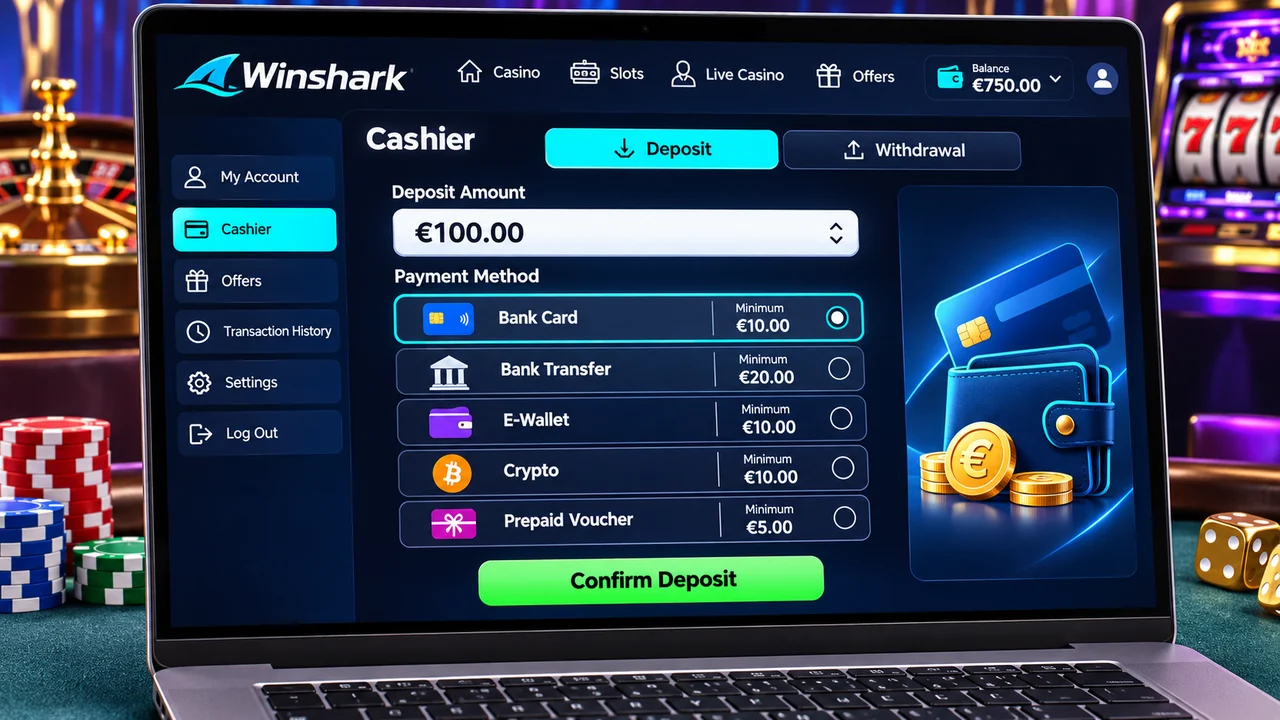
Every payment route has a cost structure, and small payments are where it shows. Card networks and gateways charge a fixed component per transaction, so a €1 card deposit can cost a casino a noticeable slice of itself. That is why the lowest tiers nearly always appear on a short list of methods and not across the whole cashier.
Bank transfer behaves differently again. Under the EU Instant Payments Regulation, euro-area banks had to be able to send instant euro transfers by 9 October 2025, and Banking and Payments Federation Ireland describes SEPA Instant as arriving within ten seconds, any hour of any day. A fee for an instant transfer cannot be higher than for a regular transfer of the same type. The rail carries small amounts happily; the limiting factor is the casino's own floor and the manual work on the other side.
Prepaid codes have a hard ceiling rather than a hard floor, and it changes the arithmetic. Without a paysafecard account, the limit is €50 per transaction; with one, up to €1,000. The constraint lands on the way out instead: winnings can only return to a paysafecard account, a standard account has a payout limit of €250 a month, and leftover code balances start to attract a €4 monthly service fee. For small planned deposits that is fine. As a route back for winnings it is the wrong tool, as our paysafecard casino guide sets out.
Wallets built on a card — Apple Pay and Google Pay — inherit the card's floor, because underneath them there is still a Visa or Mastercard debit transaction. Apple's list of Irish participants covers AIB, Bank of Ireland, Permanent TSB, Revolut, An Post, credit union current accounts, N26, bunq, Wise and Curve, so most Irish players already hold the rail. What the wallet changes is speed and convenience, not the minimum.
The practical consequence is simple: the lowest advertised tier at a site is usually available on one or two methods only, and not necessarily on the one you want paying you back. Check both pages of the cashier, deposit and withdrawal, before the first payment. Our overview of casino payment methods in Ireland compares the routes side by side.
The bonus-qualifying minimum is the one that bites
The deposit minimum tells you whether a payment will go through. The bonus-qualifying minimum tells you whether it will count. They live in different documents, and the second one is the more expensive mistake, because a first deposit is usually the only chance at a welcome offer.
Three separate conditions hide in that one sentence of the terms. There is the qualifying amount itself. There is the list of methods that qualify, which commonly excludes e-wallets and prepaid codes. And there is the timing: some offers want the deposit within a set window of registration, so a small test payment made a week earlier can disqualify the real one that follows.
There is also an Irish wrinkle worth knowing. The Gambling Regulation Act 2024 contains a prohibition on inducements for operators once they hold a licence from the Gambling Regulatory Authority of Ireland. As of October 2026 the GRAI is not yet issuing licences for online casino games, so the sites Irish players use are not bound by Irish bonus rules in the same way, and their offers are governed by their own terms and their own home regulator. That is exactly why reading the qualifying clause yourself matters more here than in a market with licensed operators.
The useful habit is to decide on the bonus before the deposit, not after. Work out the total stakes the wagering requires, compare that with the money you were planning to risk anyway, and if the answer is uncomfortable, deposit without the offer. Our casino bonus guide goes through the clauses that decide whether a bonus can ever be cashed out.
The withdrawal minimum and the stranded balance
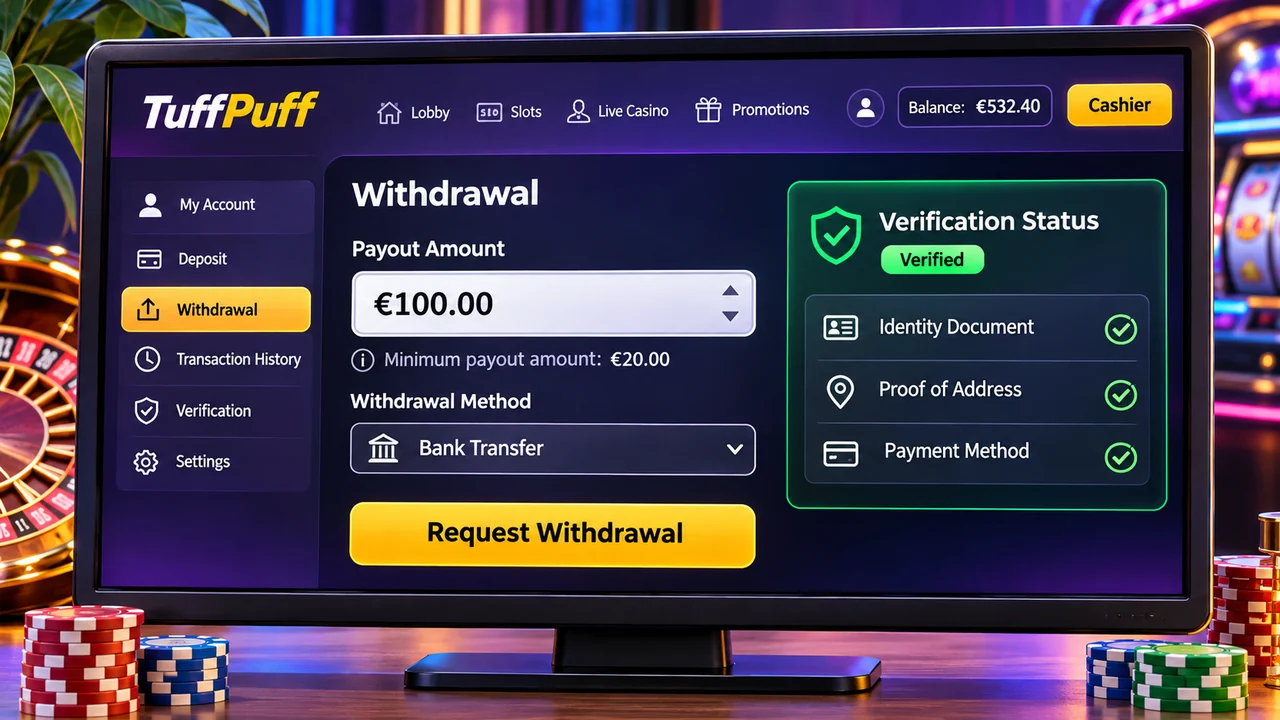
This is where small deposits go wrong most often. You pay in a small amount, the session goes well enough to leave a balance, and the withdrawal page refuses the request because the balance is under the payout minimum. The money is yours and it is also stuck, and the only two ways out are playing on until it clears the bar or playing it down to nothing.
Payout minimums exist for the same reason deposit floors do: a payout has a fixed cost in fees and in staff time. The number is usually easy to find and almost never advertised. It sits on the withdrawal page of the cashier or in the payments section of the terms, often beside the per-method limits, and it can differ by method — a bank transfer minimum higher than a wallet minimum is common.
There is a second version of the same trap with prepaid routes. If you deposited by a method that cannot receive money, the casino will route your winnings somewhere else, and that somewhere else has its own minimum and its own verification. Plan the exit before the entrance: pick a method that can pay you, in euro, in your own name.
One more detail that only shows up on small withdrawals. Verification is triggered by the first payout, not by the size of it, so a €25 withdrawal can set off the same document checks as a €2,500 one. Upload ID and proof of address while nothing is pending, and the first payout stops being a surprise. What else slows payouts down is covered in our guide to faster casino withdrawals.
What the fees do to a small deposit
A fee of a euro or two is trivial against €200 and material against €10. Small deposits are the one case where the charges deserve a look before the games do. The table collects the charges that genuinely show up on Irish accounts, with the figures that are published.
| Where it comes from | What it looks like | Why it hurts a small balance |
|---|---|---|
| Casino deposit fee | A flat charge or a percentage in the cashier | A flat charge is a fixed share of a small payment and a rounding error on a large one |
| Casino withdrawal fee | A flat charge per payout, sometimes after a free monthly allowance | Can be a double-digit percentage of a small cash-out |
| Currency conversion | Applied when the balance is not in euro | Paid twice: once going in, once coming out |
| Card dynamic currency conversion | The cashier offers to bill you in your own currency | The intermediary rate is usually worse than your bank's — decline it |
| paysafecard inactivity | €4 monthly service fee on leftover code balances | A small unused remainder erodes month by month |
| paysafecard standard payout cap | Up to €250 a month | A balance above the cap leaves in instalments |
Then there is the charge that is not a fee at all and costs more than any of them: the house edge. It applies to every euro you stake, not to every euro you deposit, which is why a €10 deposit can be staked many times over in one session and pay the margin on each pass. That is the subject of the next section, because it is the only cost here you can actually choose.
What €10 buys: the arithmetic
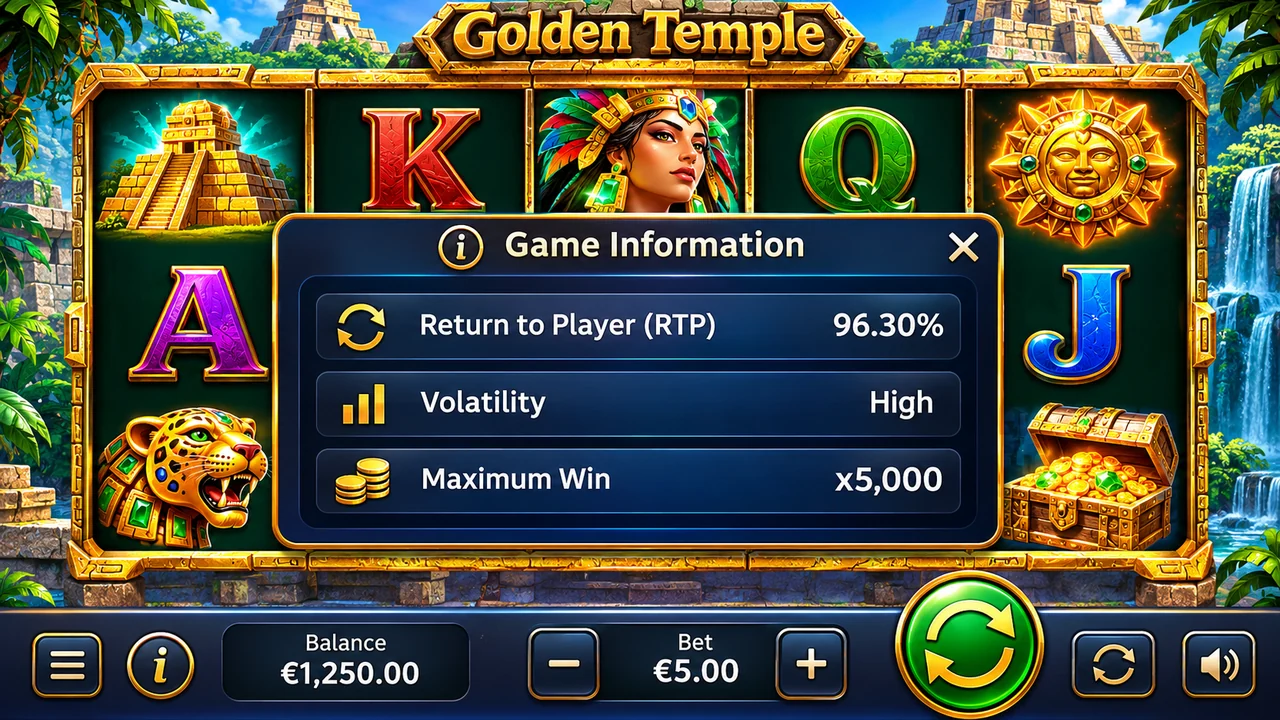
Return to player is the share of total stakes a game pays back over a very long run, and the rest is the house edge. Read it as a price per euro staked. At an RTP of 96.50% — the figure Pragmatic Play publishes for Gates of Olympus — each euro staked costs 3.5c on average. At Plinko from BGaming, with its RTP of 99%, it costs 1c. At European roulette the edge is 2.7c per euro, and on the Banker bet in baccarat about 1c.
That spread decides how long a small balance survives, and it matters far more at €10 than at €500. The table below is a worked example: it assumes a stake of 20c a spin and a pace of 500 spins an hour, which is roughly what an unhurried session looks like. Your own pace and stake will differ, so treat the shape of the result rather than the exact minutes as the point.
| Game and published RTP | Cost per euro staked | Expected cost of one hour (€100 staked) | What that does to €10 |
|---|---|---|---|
| Plinko, BGaming, RTP 99% | 1c | €1 | Roughly ten hours of expected play |
| Gates of Olympus, Pragmatic Play, RTP 96.50% | 3.5c | €3.50 | Under three hours of expected play |
| Fishin' Frenzy, Blueprint, base RTP 96.12% | 3.9c | €3.88 | About two and a half hours of expected play |
| Fishin' Frenzy, 90% version | 10c | €10 | One hour, on expectation |
The last two rows are the same game. Fishin' Frenzy's base version returns 96.12%, and versions at 90%, 92%, 93% and 94% also exist. Same reels, same features, a price that differs by a factor of two and a half. At a €10 deposit that is the difference between an evening and twenty minutes, which is why checking the RTP in the game info beats choosing by the thumbnail.
Volatility changes the same figures in a different direction. A high-volatility slot can take a €10 balance to zero long before the expected cost says it should, then occasionally pay a multiple of it. Low volatility pays small and often, so the balance drifts rather than drops. Neither is smarter; at small stakes, low volatility simply keeps you at the table longer. Starburst, for instance, lists a hit frequency of 23.00%, meaning a win on roughly one spin in four or five.
Expectation is an average over far more play than one session, not a forecast. It will not tell you how tonight goes. It does tell you which of two games is the more expensive way to spend the same €10, and that is a decision you make before you press anything.
Auditing a cashier in five minutes
Everything above can be checked before a single euro moves, from inside a registered account and without depositing. The sequence matters, because each step can end the exercise.
- Open the withdrawal page first and note the minimum and the methods listed there. If nothing there can pay you in euro in your own name, stop.
- Open the deposit page and note the minimum next to each method you would actually use, not the headline figure.
- Open the promotion terms and find the qualifying amount, the qualifying methods and the time window. Save the page with the date.
- Find the fee table in the payments section of the terms. Look for a flat withdrawal charge and any free-payout allowance.
- Check the currency of the balance. A euro balance from an Irish account avoids paying conversion twice.
- Make the first deposit small, then compare the figure on your bank statement with the figure credited in the account.
Step six is the one that catches dynamic currency conversion, unexpected rounding and the occasional cashier bug. It costs the price of the smallest deposit the site allows, which is the cheapest audit available anywhere in gambling.
Why a small deposit gets refused or does not arrive
Small payments fail more often than large ones, and the reasons are mechanical rather than mysterious. Working through them in order usually settles it without contacting anyone.
- Below the method minimum. The cashier shows the site figure, the provider refuses anyway. Raise the amount or switch method.
- Credit card. Since 5 February 2026 operators licensed by the GRAI may not accept credit cards, and the ban covers wallets loaded from a credit card. Treat credit as off limits for gambling at any site.
- A gambling block on the account. Revolut and Permanent TSB offer an in-app block, AIB and Bank of Ireland by phone. A block is doing its job when a payment fails; it is not a fault to be worked around.
- Name mismatch. The name on the card or account must match the casino account. Verification of Payee now checks the name against the IBAN on bank transfers and returns a match, close match or no match.
- Pending, not failed. Bank transfers outside instant rails and crypto deposits awaiting confirmations can take time. Check the transaction history before paying twice.
- Wallet balance too low for the full amount. Some wallets refuse partial funding rather than drawing the shortfall from a card.
If a deposit leaves your bank and does not appear in the casino balance, keep the confirmation and the reference and raise it once, with both. Reference numbers settle these cases quickly; repeat attempts mostly create a second payment to chase.
A small deposit or no deposit at all
The nearest alternative to a small first payment is an offer that asks for none, and the two are usually compared the wrong way round. A no-deposit offer costs nothing to take and is worth whatever survives its conditions: a wagering requirement, a cap on winnings, a maximum bet and a short expiry. A small deposit costs the deposit and carries none of those strings unless you attach a bonus to it.
For most Irish players the honest comparison is this. If the goal is to see whether a site's cashier, lobby and withdrawal process actually work, a minimum deposit does that properly and a no-deposit offer does not, because the first real payout is the test. If the goal is an hour of play for nothing, the no-deposit route is the only one that qualifies — and a win cap is the clause to read before anything else. We go through those caps in the no deposit bonus guide.
One Irish detail makes the small deposit slightly more attractive than it looks. Betting and gaming winnings are not liable to capital gains tax, per Revenue, so what comes out of a successful session is not reduced by tax in the way it would be in some other markets. That is about the winnings, not about the odds: the house edge in the table above has not moved.
Finally, the limit that is worth more than every figure on this page: the one you set yourself. Since 5 February 2026 licensees of the GRAI must provide a deposit limit facility, and most offshore sites offer the same tool regardless. Set it before the first deposit rather than after a bad session. Gambling is for over-18s only — stake only money you can afford to lose.
Minimum deposit questions Irish players ask
Why does the cashier refuse my deposit even though it is above the advertised minimum?
Because the advertised figure is usually the lowest available on any method, and your method has its own floor. Check the minimum shown beside the specific method rather than the headline number, and switch route if it is higher than you want to pay.
Does a minimum deposit qualify for the welcome offer?
Not automatically. The qualifying amount sits in the promotion terms and is often higher than the cashier minimum, and e-wallets and prepaid codes are frequently excluded. Read that clause before the first payment, because it is usually your only shot at the offer.
Can I withdraw winnings from a very small deposit?
Yes, as long as the balance clears the withdrawal minimum and no bonus is active on the account. If the balance is below that minimum, the only options are to keep playing or to play it down, so check the figure before depositing.
Which method has the lowest minimum in Ireland?
It varies by site rather than by market, and the low tiers usually appear on a short list of methods. SEPA Instant bank transfers carry small euro amounts easily, and prepaid codes suit small planned deposits, but codes are a poor route for getting winnings back.
Are credit cards allowed for small deposits?
No. Since 5 February 2026 operators licensed by the GRAI may not accept credit card payments, and the ban extends to wallets funded from a credit card. Playing with borrowed money is a bad idea whatever the site's rules permit.
Is a deposit fee normal?
Deposit fees are uncommon at the casino end but not unknown, and withdrawal fees are more common. Find the fee table in the payments section of the terms, because a flat charge is a large percentage of a small cash-out and a rounding error on a large one.
Is online gambling for real money legal in Ireland?
Ireland is in the middle of the biggest overhaul of its gambling law in decades. The Gambling Regulation Act 2024 created a single regulator, the Gambling Regulatory Authority of Ireland (GRAI), which was formally established in March 2025. Since 5 February 2026 the GRAI has been the licensing authority for all forms of betting, and its first remote betting licences, covering online and phone betting, apply from 1 July 2026.
Online casino games come later. Applications for the remaining licence types, gaming among them, are due to open throughout 2027 and 2028. In practice, as of October 2026 the GRAI is not yet issuing licences for online casinos. Its public register showed 39 business-to-consumer licence holders in October 2026, and they are betting operators. So when you play at real money casinos in Ireland today, the site is not licensed by the GRAI for casino games, whatever its banners say. If you are looking for an Irish online casino for real money in the licensed sense, there is none yet.
For you as a player, the key detail is that the Act’s duties apply to an operator once it holds a GRAI licence. Those duties include a ban on accepting credit cards, a duty to give you a deposit limit facility and a rule against unreasonably withholding winnings. An offshore casino without a GRAI licence is not bound by these Irish rules in the same way, so your protection rests largely on its own terms and how it behaves. That is why the payout and terms checks in this guide matter so much.
Age is not a grey area. The Act defines a child as anyone under 18, and licensed operators must not let a child gamble. Real money casinos in Ireland, licensed or not, are for adults only, and any site worth using will ask for proof of age before it pays out. If a casino lets you play for weeks without a single question about your age or identity, take that as a warning sign rather than a convenience.
| Rule or milestone | Status |
|---|---|
| GRAI formally established | March 2025 |
| GRAI becomes licensing authority for betting | From 5 February 2026 |
| Remote betting licences (online and phone) | From 1 July 2026 |
| In-person betting licences | From 1 December 2026 |
| Online casino (remote gaming) licences | Applications expected throughout 2027 and 2028 |
| Ban on credit card payments for licensees | In force since 5 February 2026 |
| Deposit limit facility for players of licensees | In force since 5 February 2026 |
| Ban on bonuses and other inducements (s. 157) | Not yet commenced |
| National Gambling Exclusion Register | Not yet commenced |
| TV and radio advertising watershed | Not yet commenced |
Top casinos for real money: why WINSHARK is our pick
For this guide our first choice for playing casino online for real money from Ireland is WINSHARK. It puts a casino, a live casino and a sportsbook on one account with one balance, so you are not juggling logins or moving money between wallets. New players can take a welcome bonus of +250% on your deposit. The brand holds an average score of 5.0 from 2,748 player reviews.

The cashier is the other reason it sits at the top here. WINSHARK lists a wide spread of payment options, with bank cards, e-wallets and cryptocurrencies among them, so most Irish players will find a method they already use. Minimums and limits depend on the method and can change, so confirm them in the cashier after you log in rather than relying on any table on a review site, ours included.
Be clear on one point before you sign up. WINSHARK is an offshore operator and does not hold a licence from the Gambling Regulatory Authority of Ireland (GRAI). Read the full bonus terms on the WINSHARK site before you opt in, set your own deposit limit from the first day and have your ID documents ready so the first withdrawal is not held up.
Your first real money deposit: methods compared
The method you deposit with matters more than the amount, because at most casinos it is also the route your winnings come back on. Pick something you would be happy to receive money to, in euro, in your own name. For most Irish players that means a debit card, Revolut, Apple Pay or Google Pay, a bank transfer, a prepaid paysafecard or crypto.
One rule changed this year. Since 5 February 2026, operators licensed by the GRAI may not accept payment by credit card, and the ban covers e-wallets or other digital routes loaded from a credit card. Whatever the site, treat credit as off limits for gambling. Playing with borrowed money turns a bad night into debt.
Make the first deposit small. It tests the cashier, shows you whether the method works smoothly for your bank and lets you see how the site handles bonuses before more money is at stake. Once it works, you can raise deposits to your planned session amount. Keep the receipts or confirmation emails for the first few payments, so you can match them against the casino’s own history if anything looks off.
| Method | Deposit | Withdrawal | Worth knowing |
|---|---|---|---|
| Visa or Mastercard debit | Usually instant | Often available, usually slower than wallets | Use debit, never credit |
| Apple Pay / Google Pay | Instant, using the card in your phone wallet | Often returned to the underlying card or another method | AIB, Bank of Ireland, PTSB, Revolut and An Post cards work in Apple Pay |
| Revolut | Instant with the Revolut card | To the card or your IE IBAN | Irish branch with IE IBANs; gambling block in the app |
| Bank transfer (SEPA Instant) | Within 10 seconds, 24/7, when both sides support it | To your IBAN | Verification of Payee checks the name on the account |
| paysafecard | Instant with a 16-digit code | Only through a paysafecard account | Up to €50 per transaction without an account |
| Crypto | After network confirmations | To your own wallet address | Price moves and CGT on later gains |
Best online casino games for real money: the numbers compared
There is no single best choice among casino games online for real money, but there are clear differences in price. The table below puts the published figures side by side. Table games with simple bets, such as the Banker bet in baccarat or European roulette, carry some of the lowest house edges in the casino. Slots cost more per euro staked but offer features, free spins and the chance of a large multiplier. Instant games like Plinko sit at the low-edge end, but their speed changes the picture, as the next sections show.
Use the table to rule out bad versions rather than to chase the top line. American roulette and its five-number bet are the clearest examples of games that cost more for no extra entertainment. Blackjack’s price depends on the table rules and how you play, so look for 3 to 2 blackjack payouts and learn basic strategy before you sit down with real money.
Matching the game to the player matters too. If you want long, calm sessions on a small budget, a slot with frequent small wins such as Starburst, with its 23.00% hit frequency, or European roulette on even-money bets fits well. If you want simple low-edge play, baccarat on Banker is hard to beat. If you want features and the chance of a big multiplier, the Pragmatic Play slots above deliver that at around 96.5% RTP, with bigger multipliers and bigger swings.
| Game | Type | RTP or house edge | Source of the figure |
|---|---|---|---|
| Plinko (BGaming) | Instant game | RTP 99% | Provider |
| Baccarat, Banker bet | Table | House edge 1.06% (8 decks) | Game maths |
| Baccarat, Player bet | Table | House edge 1.24% (8 decks) | Game maths |
| European roulette | Table | House edge 2.70% (1/37) | Game maths |
| Big Bass Bonanza | Slot | RTP 96.71% | Pragmatic Play |
| Gates of Olympus | Slot | RTP 96.50% | Pragmatic Play |
| Sweet Bonanza | Slot | RTP 96.48% | Pragmatic Play |
| Fishin’ Frenzy, base version | Slot | RTP 96.12% | Blueprint Gaming |
| Starburst | Slot | RTP 96.08% | NetEnt |
| American roulette | Table | House edge 5.26% (1/19) | Game maths |
| American roulette, 0-00-1-2-3 bet | Table | House edge 7.89% | Game maths |
| Blackjack | Table | Depends on rules and play; 6 to 5 tables cost about 1.39% more than 3 to 2 | Game maths |
Real money bonuses: how wagering works, with a worked example
A casino bonus is money with conditions attached. The main condition is wagering, also called playthrough: you must stake the bonus, sometimes the bonus plus your deposit, a set number of times before any of it becomes withdrawable cash. Until then, the bonus funds and anything won with them belong to the casino’s rules, not to you.

Take a hypothetical offer, not any real casino’s terms: deposit €50, get a 100% match of €50, with 35x wagering on the bonus. You must stake €50 × 35 = €1,750 before you can withdraw. On a slot returning 96%, the expected cost of staking €1,750 is 4% of that, or €70. On average about €30 of the €100 balance is left, €20 less than the €50 you deposited. Make it 35x deposit plus bonus and you must stake €3,500, at an expected cost of €140.
That sum explains why wagering is the first number to read. Lower is better, and anything above about 40x on the bonus is hard work. It also explains the volatility choice: high-volatility slots turn wagering into a bet on one big feature, while low-volatility games grind through it more predictably but rarely leave much on top.
At WINSHARK the welcome bonus is +250% on your deposit. The wagering, eligible games and deadline are set out in the bonus terms on the WINSHARK site, so read them before you opt in. Then run the same sum with the real figures: the bonus amount, times the wagering, times the house edge of the game you plan to play. If the expected cost comes close to the bonus itself, the offer is mainly a way to play longer, not a way to profit.
- 10x on a €50 bonus: €500 to stake, expected cost €20 at 96% RTP.
- 20x on a €50 bonus: €1,000 to stake, expected cost €40.
- 35x on a €50 bonus: €1,750 to stake, expected cost €70.
- 35x on deposit plus bonus (€100): €3,500 to stake, expected cost €140.
- 50x on a €50 bonus: €2,500 to stake, expected cost €100, double the bonus itself.
Cashing out your real money winnings, step by step
A withdrawal is where any real money casino online proves itself. The process is simple when the groundwork is done: account verified, no active bonus, and a payment method in your name that the casino can pay back to. Expect a pending period at many sites while the request is reviewed, followed by the payment time of the method itself. Instant bank transfers and e-wallets tend to be the quickest once approved; cards and standard transfers take longer.
Under the Gambling Regulation Act 2024, a GRAI licensee must not unreasonably withhold the payment of winnings. An offshore casino is held to its own terms instead, which is one more reason to test its withdrawals with a small amount early on. If speed is your priority, our fast withdrawal casino guide compares methods by how quickly money actually lands.
- Check the balance is withdrawableOpen the cashier and look at the split between real money and bonus money. Only the real money part can be withdrawn while a bonus is active.
- Choose the payout methodPick the method you deposited with where possible. The casino may pay up to the deposited amount back to it before using another route.
- Enter the amountRespect the minimum withdrawal for the method. If you won well, consider taking it all and depositing again later rather than leaving a large balance.
- Confirm and answer any checksIf the casino asks for documents or a payment confirmation, send them promptly and in good quality.
- Leave the request aloneDo not reverse it to keep playing. Log out, and note the date and reference of the request.
- Check the money arrived in fullCompare the amount received with the amount requested and query any difference with support in writing.
300 free spins Claim the bonus 18+ · Bonus terms in the WINSHARK rules