
Crypto Casinos: How They Work, from Wallet to Payout
 Best casinos available in IrelandUpdated 7 November 2026


Crypto casinos are ordinary online casinos with a blockchain cashier bolted to the front, and nearly everything that catches players out sits in that cashier rather than in the games. The coin you choose, the network you send it over and the currency your balance is held in decide what your money is worth by the time it comes back. Ireland adds a second layer, because no online casino holds an Irish licence for casino games yet and the tax treatment of a coin is not the tax treatment of a bet.

 300 free spins Claim the bonus 18+ · Bonus terms in the WINSHARK rules
What crypto casinos actually are
The phrase covers three different products, and knowing which one you have opened answers most of the questions that follow. The first is the crypto-native site: accounts are funded only in coins, balances are held in coins, and there is no bank anywhere in the chain. The second is the hybrid, which takes cards and bank transfers alongside coins and usually converts a crypto deposit into a euro balance the moment it lands. The third is a conventional casino that has added a crypto option to an otherwise fiat cashier, often through a third-party payment processor.
The difference that matters is not the branding but what your balance is denominated in. A coin-denominated balance keeps moving in value while you play and while a withdrawal is pending. A fiat-pegged balance locks the value at the moment of deposit, and the coin price stops mattering until you cash out. Sites rarely explain this on the deposit page; the cashier shows it, because one displays a coin figure and the other a euro figure.
| Type | How the balance is held | What to watch |
|---|---|---|
| Crypto-native | In coins, usually with a fiat display value | Balance value moves with the market, including overnight and during a pending payout |
| Hybrid fiat and crypto | Converted to euro at deposit, often at the site's own rate | The conversion rate and spread, which are set by the site, not by an exchange |
| Fiat site with a crypto option | In euro, with crypto handled by a processor | Whether a crypto deposit can be withdrawn the same way, or only to a bank |
Underneath all three, the games are the same titles from the same studios running the same maths. Crypto changes the plumbing, the speed and the paperwork. It does not change the house edge, which is the one number that decides what an hour of play costs. Our wider comparison of casino payment methods in Ireland puts crypto next to cards, wallets and bank transfers on exactly those terms.
Where Ireland stands in 2026
Irish gambling law is mid-overhaul. The Gambling Regulation Act 2024 created a single regulator, the Gambling Regulatory Authority of Ireland, which was formally established in March 2025. Since 5 February 2026 the GRAI has been the licensing authority for betting, and its first remote betting licences apply from 1 July 2026. Applications for the remaining licence types, gaming among them, are due to open through 2027 and 2028. As of October 2026 the GRAI is not yet issuing licences for online casino games, so no crypto casino — and no other online casino — holds an Irish licence for the games it offers you.
Two consequences follow for a crypto player. First, the duties the Act places on a licensee, among them the ban on accepting credit cards that took effect on 5 February 2026 and the rule against unreasonably withholding winnings, bind an operator once it holds a GRAI licence. An offshore site is held to its own terms instead, which is why its withdrawal policy deserves a careful read. Second, buying the coins is a separate regulated activity from gambling with them: crypto service providers in the EU fall under MiCAR, and in Ireland the Central Bank of Ireland is the competent authority, so buy and sell through a provider it has authorised.
Age is not a grey area either. The Act treats anyone under 18 as a child, and no amount of blockchain changes that. Our page on crypto casinos for Irish players keeps the legal timeline up to date as licence types come into force.
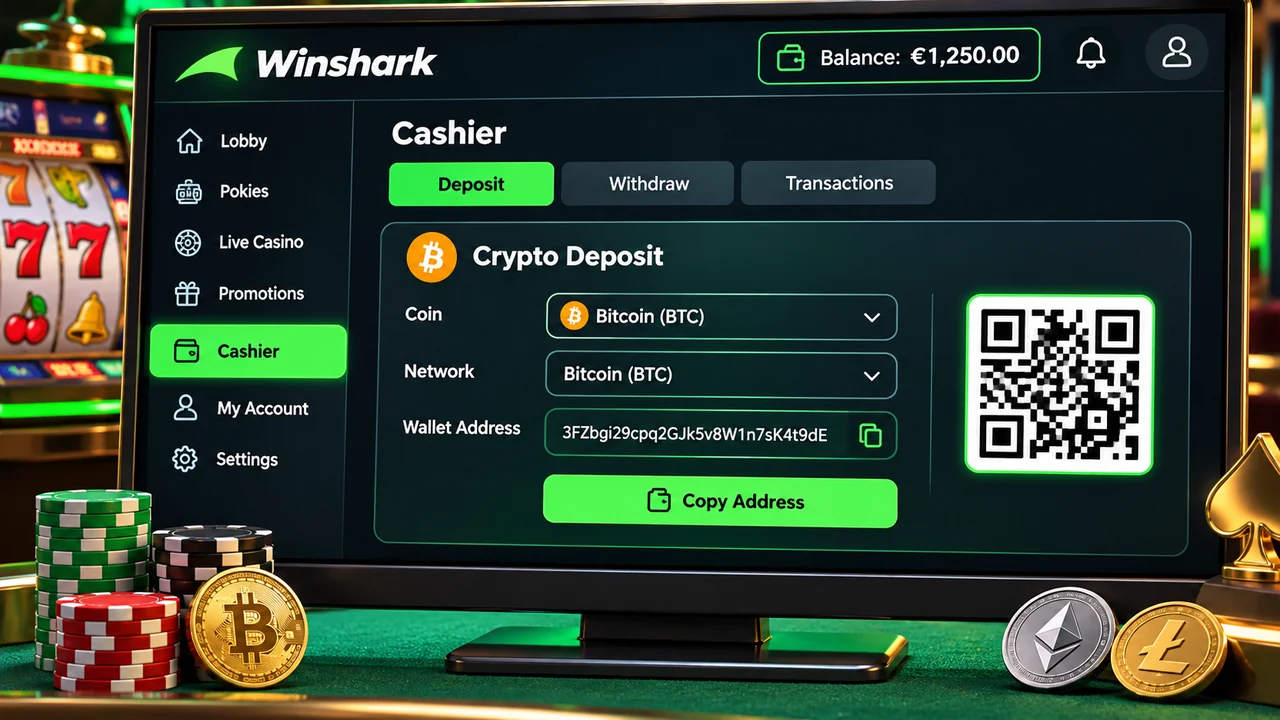
The deposit path, step by step
A crypto deposit is not a payment request that can be cancelled. It is a transfer you construct yourself, and every field you fill in is one you are responsible for. The sequence is always the same.
- Pick the coin in the cashier first, not in your wallet. The site generates a deposit address that belongs to that coin and nothing else.
- Pick the network next. The same stablecoin exists on several chains, and an address on one chain will not receive a transfer sent over another. This single mistake is the most common way to lose a crypto deposit permanently.
- Check whether the deposit needs a memo, tag or comment field. A few chains route funds to the right account using that field, and a transfer without it can sit unattributed until support intervenes, if it can be recovered at all.
- Note the minimum deposit. Below it, the site may not credit the transfer at all, and the amount is usually too small to be worth a manual recovery.
- Send a test amount the first time, from a wallet you control. Exchange withdrawals can be delayed, batched or blocked under the exchange's own gambling policy, which is a second queue you cannot see.
- Wait for the confirmations the site requires, not the ones your wallet shows. The cashier decides how many confirmations count, and that number varies by coin and by site.
Keep the transaction hash for every deposit. It is the only piece of evidence that settles a dispute about whether money arrived, and it takes a second to copy while the transfer is on screen and considerably longer to reconstruct afterwards.
Coins and networks at crypto casinos, compared
Players tend to pick a coin by familiarity and then wonder why the experience differs from the last site. The practical differences come down to three things: how long settlement takes, who pays the network fee and how much the price moves while you hold it.
| Coin | Settlement behaviour | Fee character | Price behaviour |
|---|---|---|---|
| Bitcoin | Slowest of the common options; confirmation times rise when the network is busy | Paid by the sender and set by network demand, not by the casino | Volatile against the euro |
| Ethereum on the main chain | Faster than Bitcoin, but variable under load | Gas is paid by the sender and can be high at peak times | Volatile against the euro |
| Ethereum layer-2 networks | Fast and cheap, but only if the casino supports that exact network | Low, with the risk that the site credits only main-chain transfers | Volatile against the euro |
| Stablecoins such as USDT or USDC | Depends entirely on the chain you send them over | Chain-dependent; the cheapest chain is often the one the site prefers | Pegged, so the euro value barely moves |
| Litecoin | Quick and predictable | Low and stable | Volatile against the euro |
| Solana or Tron | Fast, often seconds | Low; both are common for stablecoin transfers | Volatile for the native coin, pegged for stablecoins carried on them |
Nothing in that table is a recommendation, and the figures a site quotes for its own speeds are averages at best. If you are weighing one coin against another in detail, our pages on a Bitcoin casino cashier and on ETH and USDT deposits go through fees and confirmations coin by coin.
Stablecoins against volatile coins: what your balance is worth
On a coin-denominated balance, the market is a second game running alongside the one on screen. Here is the mechanism, with round numbers chosen as an illustration rather than taken from any site: you deposit coins worth €200, play to a balance of the same coin value, and the coin drops a tenth while your withdrawal is pending. The coin count in your account is unchanged, and you have €20 less. A rise does the same thing in your favour, which is precisely the problem — you did not choose to take that position, the cashier chose it for you.
Stablecoins are the usual answer. A balance held in a euro- or dollar-pegged token behaves like a fiat balance while keeping the speed and the wallet-to-wallet path. The trade is that you now carry the issuer's risk rather than the market's, and that a dollar-pegged token still moves against the euro, which is the currency your rent is in.
The quiet third option is a hybrid that converts at deposit. The volatility disappears, but you accept the site's conversion rate twice, once in and once out, and that spread is rarely published. Compare it against the day's market rate on your first small deposit and you will know what it costs before it applies to a real sum.
Payouts: why instant has two halves
Every crypto withdrawal has an operator half and a network half, and only the second is fast by nature. The operator half is a queue: the request is reviewed, the account is checked for open bonuses and unverified documents, risk rules run, and a human may sign off above a certain amount. The network half is settlement, which for most coins takes minutes. A site advertising instant payouts is describing the second half and keeping quiet about the first.
This is why two players at the same crypto casino report wildly different experiences. The one who verified documents on day one and withdraws to a whitelisted address inside a routine amount is through in minutes. The one who requests a large payout to a fresh address with an unfinished bonus attached waits for review. Neither is evidence about the site; both are evidence about the account.
- Withdraw to an address you have used before where the site supports whitelisting; new addresses often trigger an extra hold.
- Close or forfeit an active bonus before requesting a payout, and read what forfeiting does to the balance first.
- Expect the same-method rule to apply: many sites return winnings over the route the deposit came in on.
- Watch for a minimum withdrawal that is higher than the minimum deposit, which is the norm rather than the exception.
- Ask support, in writing, who pays the network fee on a payout. Some sites deduct it, some absorb it, and the difference is visible only on the first withdrawal.
Our guide to getting paid sooner breaks the same timeline down by method, including the parts of the delay that belong to the operator rather than the rail.
KYC and the myth of the paperwork-free casino
Crypto removes the bank, not the identity check. Operators licensed by the GRAI work to the Verification of Identity and Age Regulations 2026; offshore sites run their own checks under their terms, and in practice ask for much the same documents. What differs is timing. Some verify at sign-up, others wait until the first withdrawal request, which is exactly the moment when a delay is least welcome.
Sites that advertise no verification at all are usually describing a threshold rather than a policy: play small and nothing is asked, cross an internal limit and the request arrives anyway, often mid-withdrawal. Treat a low barrier on the way in as a sign of a higher barrier on the way out, and send your documents before you need the money. Our page on what no-KYC really means covers the thresholds and what they are tied to.
Provably fair: what it proves and what it does not
Crypto-native sites often run their own instant games with a provably fair mechanism. In outline: the site commits to a hashed server seed before play, your client contributes a seed, and after the round you can combine the two and reproduce the result yourself. Done properly, it proves one specific thing — that the outcome was not changed after your bet was placed.
It does not prove the game is generous, because the house edge is baked into the payout table and sits there in plain sight regardless. It does not prove the operator is solvent, or that it will process your withdrawal, or that the published edge is the one configured. And it says nothing at all about the third-party slots in the same lobby, which are certified the conventional way by testing laboratories. Verifiable and trustworthy are different claims; the first is a maths property, the second is a track record.
Bonuses in crypto: where the terms get slippery
Bonus terms were written for fiat accounts and translate awkwardly. Three clauses do most of the damage. The first is the conversion moment: a percentage match on a coin deposit has to be priced in something, and if the site prices it at the rate when you claim, a later price move changes the real size of the bonus and of the wagering attached to it.
The second is the currency the wagering requirement is measured in. A requirement expressed in euro against a coin balance means the target itself drifts with the market. The third is the maximum bet rule, which is often published as a fiat figure while you are staking coin units — a stake that was compliant on Monday can breach the cap on Friday without you touching the bet size. That is one of the standard ways a balance is voided, and it is entirely avoidable by keeping stakes well under the cap.
The arithmetic of a wagering requirement does not change because the money is digital. Multiply the bonus by the multiplier, compare that turnover to what you normally stake in a session, and decide whether the offer is worth the restrictions it brings with it.
Tax in Ireland: the bet and the coin are treated differently
Revenue's list of gains exempt from Capital Gains Tax includes gains from betting, lottery wins, prize bonds and sweepstakes, which is why a recreational win paid in euro is not normally something an Irish player declares for CGT. The duty on betting is paid by operators, not players: Revenue charges remote betting duty of 2% on bets placed by remote means, and Budget 2027, announced on 6 October 2026, left that rate at 2%.
Coins are the exception that catches people out. If a casino pays you in crypto and you later sell or swap those coins at a higher price, the gain on the coins falls under CGT on crypto-assets. From 7 October 2026 the rate is 31% for most gains, down from 33%, and the first €1,270 of gains each year is covered by the annual personal exemption. Say you withdraw €2,000 worth of coins and sell them later for €2,600: the €600 gain fits inside the exemption if it is your only gain that year, and it still belongs in your records.
The practical habit this calls for is boring and cheap: log the date, the coin, the amount and the euro value every time you withdraw, and again when you sell. If a win is ever large enough to change your plans, pay for an hour with a tax adviser before you move it anywhere.
A test run before the real deposit
A crypto casino can be assessed in about half an hour and for a small amount of money, and the result tells you more than any ranking. Run it in this order.
- Register and complete verification immediately, before any money moves.
- Read the withdrawal section of the terms and write down the minimum, the method rule and the stated processing time.
- Deposit a small amount on the cheapest supported network, keeping the transaction hash.
- Check what landed: the coin count, the euro display value and whether the site converted anything.
- Play briefly at a small stake, with no bonus attached, so nothing complicates the next step.
- Request a withdrawal while the balance is still small, and time the gap between the request, the approval and the arrival in your wallet.
Three timestamps and one transaction hash are a better basis for trusting a site with a larger sum than any score out of ten. And be clear about what crypto never fixes: transfers are irreversible, there is no chargeback, the house edge is unchanged, and with no Irish casino licences issued yet there is no local regulator to escalate a dispute to. Gambling is for over-18s, it costs money and it is not a way to earn. Set a deposit limit before the first session and keep it.
Crypto casino questions we get asked
Are crypto casinos legal in Ireland?
Playing is not what the law targets, but no site holds an Irish licence for casino games. The GRAI has licensed betting since 5 February 2026, and applications for gaming licences are only due to open through 2027 and 2028. Any crypto casino you can use from Ireland today is offshore and bound by its own terms rather than by Irish licence conditions.
Do crypto casino payouts really arrive in minutes?
The blockchain part usually does. The operator part is a review queue, and that is where the time goes: unverified documents, an open bonus, a new withdrawal address or an unusually large amount all add hours. Verify early, withdraw to a known address and the minutes are realistic.
What happens if I send a deposit over the wrong network?
In most cases the funds are not recoverable, and where recovery is possible it needs manual work by both the site and the chain's tooling. Choose the coin in the cashier, choose the network it names, and send a small test transfer the first time you use a new site.
Is a Bitcoin casino different from a stablecoin casino?
The games are the same; the balance behaves differently. A Bitcoin balance moves in value while you play and while a payout is pending, and a stablecoin balance barely does. Bitcoin also settles more slowly and its network fee rises with demand, which matters most on small deposits.
Do I pay tax on crypto casino winnings in Ireland?
Revenue lists gains from betting as exempt from Capital Gains Tax, so a recreational win does not normally create a CGT bill. The coins are separate: if you are paid in crypto and later sell it for more, the gain on the coins falls under CGT, at 31% for most gains from 7 October 2026, after the €1,270 annual exemption.
Can I use a credit card to buy crypto for gambling?
Operators licensed by the GRAI have been banned from accepting credit card payments since 5 February 2026, and the ban covers digital routes funded from credit. Buying coins with credit and then depositing them is the same bad idea wearing a disguise: gambling with borrowed money turns a bad session into debt.
Is online gambling for real money legal in Ireland?
Ireland is in the middle of the biggest overhaul of its gambling law in decades. The Gambling Regulation Act 2024 created a single regulator, the Gambling Regulatory Authority of Ireland (GRAI), which was formally established in March 2025. Since 5 February 2026 the GRAI has been the licensing authority for all forms of betting, and its first remote betting licences, covering online and phone betting, apply from 1 July 2026.
Online casino games come later. Applications for the remaining licence types, gaming among them, are due to open throughout 2027 and 2028. In practice, as of October 2026 the GRAI is not yet issuing licences for online casinos. Its public register showed 39 business-to-consumer licence holders in October 2026, and they are betting operators. So when you play at real money casinos in Ireland today, the site is not licensed by the GRAI for casino games, whatever its banners say. If you are looking for an Irish online casino for real money in the licensed sense, there is none yet.
For you as a player, the key detail is that the Act’s duties apply to an operator once it holds a GRAI licence. Those duties include a ban on accepting credit cards, a duty to give you a deposit limit facility and a rule against unreasonably withholding winnings. An offshore casino without a GRAI licence is not bound by these Irish rules in the same way, so your protection rests largely on its own terms and how it behaves. That is why the payout and terms checks in this guide matter so much.
Age is not a grey area. The Act defines a child as anyone under 18, and licensed operators must not let a child gamble. Real money casinos in Ireland, licensed or not, are for adults only, and any site worth using will ask for proof of age before it pays out. If a casino lets you play for weeks without a single question about your age or identity, take that as a warning sign rather than a convenience.
| Rule or milestone | Status |
|---|---|
| GRAI formally established | March 2025 |
| GRAI becomes licensing authority for betting | From 5 February 2026 |
| Remote betting licences (online and phone) | From 1 July 2026 |
| In-person betting licences | From 1 December 2026 |
| Online casino (remote gaming) licences | Applications expected throughout 2027 and 2028 |
| Ban on credit card payments for licensees | In force since 5 February 2026 |
| Deposit limit facility for players of licensees | In force since 5 February 2026 |
| Ban on bonuses and other inducements (s. 157) | Not yet commenced |
| National Gambling Exclusion Register | Not yet commenced |
| TV and radio advertising watershed | Not yet commenced |
Top casinos for real money: why WINSHARK is our pick
For this guide our first choice for playing casino online for real money from Ireland is WINSHARK. It puts a casino, a live casino and a sportsbook on one account with one balance, so you are not juggling logins or moving money between wallets. New players can take a welcome bonus of +250% on your deposit. The brand holds an average score of 5.0 from 2,748 player reviews.

The cashier is the other reason it sits at the top here. WINSHARK lists a wide spread of payment options, with bank cards, e-wallets and cryptocurrencies among them, so most Irish players will find a method they already use. Minimums and limits depend on the method and can change, so confirm them in the cashier after you log in rather than relying on any table on a review site, ours included.
Be clear on one point before you sign up. WINSHARK is an offshore operator and does not hold a licence from the Gambling Regulatory Authority of Ireland (GRAI). Read the full bonus terms on the WINSHARK site before you opt in, set your own deposit limit from the first day and have your ID documents ready so the first withdrawal is not held up.
Your first real money deposit: methods compared
The method you deposit with matters more than the amount, because at most casinos it is also the route your winnings come back on. Pick something you would be happy to receive money to, in euro, in your own name. For most Irish players that means a debit card, Revolut, Apple Pay or Google Pay, a bank transfer, a prepaid paysafecard or crypto.
One rule changed this year. Since 5 February 2026, operators licensed by the GRAI may not accept payment by credit card, and the ban covers e-wallets or other digital routes loaded from a credit card. Whatever the site, treat credit as off limits for gambling. Playing with borrowed money turns a bad night into debt.
Make the first deposit small. It tests the cashier, shows you whether the method works smoothly for your bank and lets you see how the site handles bonuses before more money is at stake. Once it works, you can raise deposits to your planned session amount. Keep the receipts or confirmation emails for the first few payments, so you can match them against the casino’s own history if anything looks off.
| Method | Deposit | Withdrawal | Worth knowing |
|---|---|---|---|
| Visa or Mastercard debit | Usually instant | Often available, usually slower than wallets | Use debit, never credit |
| Apple Pay / Google Pay | Instant, using the card in your phone wallet | Often returned to the underlying card or another method | AIB, Bank of Ireland, PTSB, Revolut and An Post cards work in Apple Pay |
| Revolut | Instant with the Revolut card | To the card or your IE IBAN | Irish branch with IE IBANs; gambling block in the app |
| Bank transfer (SEPA Instant) | Within 10 seconds, 24/7, when both sides support it | To your IBAN | Verification of Payee checks the name on the account |
| paysafecard | Instant with a 16-digit code | Only through a paysafecard account | Up to €50 per transaction without an account |
| Crypto | After network confirmations | To your own wallet address | Price moves and CGT on later gains |
Best online casino games for real money: the numbers compared
There is no single best choice among casino games online for real money, but there are clear differences in price. The table below puts the published figures side by side. Table games with simple bets, such as the Banker bet in baccarat or European roulette, carry some of the lowest house edges in the casino. Slots cost more per euro staked but offer features, free spins and the chance of a large multiplier. Instant games like Plinko sit at the low-edge end, but their speed changes the picture, as the next sections show.
Use the table to rule out bad versions rather than to chase the top line. American roulette and its five-number bet are the clearest examples of games that cost more for no extra entertainment. Blackjack’s price depends on the table rules and how you play, so look for 3 to 2 blackjack payouts and learn basic strategy before you sit down with real money.
Matching the game to the player matters too. If you want long, calm sessions on a small budget, a slot with frequent small wins such as Starburst, with its 23.00% hit frequency, or European roulette on even-money bets fits well. If you want simple low-edge play, baccarat on Banker is hard to beat. If you want features and the chance of a big multiplier, the Pragmatic Play slots above deliver that at around 96.5% RTP, with bigger multipliers and bigger swings.
| Game | Type | RTP or house edge | Source of the figure |
|---|---|---|---|
| Plinko (BGaming) | Instant game | RTP 99% | Provider |
| Baccarat, Banker bet | Table | House edge 1.06% (8 decks) | Game maths |
| Baccarat, Player bet | Table | House edge 1.24% (8 decks) | Game maths |
| European roulette | Table | House edge 2.70% (1/37) | Game maths |
| Big Bass Bonanza | Slot | RTP 96.71% | Pragmatic Play |
| Gates of Olympus | Slot | RTP 96.50% | Pragmatic Play |
| Sweet Bonanza | Slot | RTP 96.48% | Pragmatic Play |
| Fishin’ Frenzy, base version | Slot | RTP 96.12% | Blueprint Gaming |
| Starburst | Slot | RTP 96.08% | NetEnt |
| American roulette | Table | House edge 5.26% (1/19) | Game maths |
| American roulette, 0-00-1-2-3 bet | Table | House edge 7.89% | Game maths |
| Blackjack | Table | Depends on rules and play; 6 to 5 tables cost about 1.39% more than 3 to 2 | Game maths |
Real money bonuses: how wagering works, with a worked example
A casino bonus is money with conditions attached. The main condition is wagering, also called playthrough: you must stake the bonus, sometimes the bonus plus your deposit, a set number of times before any of it becomes withdrawable cash. Until then, the bonus funds and anything won with them belong to the casino’s rules, not to you.
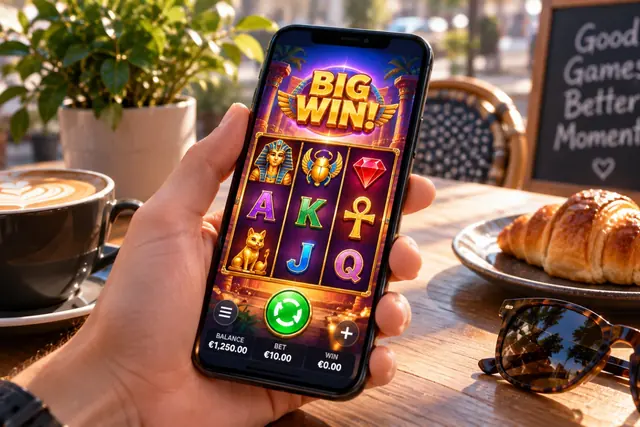
Take a hypothetical offer, not any real casino’s terms: deposit €50, get a 100% match of €50, with 35x wagering on the bonus. You must stake €50 × 35 = €1,750 before you can withdraw. On a slot returning 96%, the expected cost of staking €1,750 is 4% of that, or €70. On average about €30 of the €100 balance is left, €20 less than the €50 you deposited. Make it 35x deposit plus bonus and you must stake €3,500, at an expected cost of €140.
That sum explains why wagering is the first number to read. Lower is better, and anything above about 40x on the bonus is hard work. It also explains the volatility choice: high-volatility slots turn wagering into a bet on one big feature, while low-volatility games grind through it more predictably but rarely leave much on top.
At WINSHARK the welcome bonus is +250% on your deposit. The wagering, eligible games and deadline are set out in the bonus terms on the WINSHARK site, so read them before you opt in. Then run the same sum with the real figures: the bonus amount, times the wagering, times the house edge of the game you plan to play. If the expected cost comes close to the bonus itself, the offer is mainly a way to play longer, not a way to profit.
- 10x on a €50 bonus: €500 to stake, expected cost €20 at 96% RTP.
- 20x on a €50 bonus: €1,000 to stake, expected cost €40.
- 35x on a €50 bonus: €1,750 to stake, expected cost €70.
- 35x on deposit plus bonus (€100): €3,500 to stake, expected cost €140.
- 50x on a €50 bonus: €2,500 to stake, expected cost €100, double the bonus itself.
Cashing out your real money winnings, step by step
A withdrawal is where any real money casino online proves itself. The process is simple when the groundwork is done: account verified, no active bonus, and a payment method in your name that the casino can pay back to. Expect a pending period at many sites while the request is reviewed, followed by the payment time of the method itself. Instant bank transfers and e-wallets tend to be the quickest once approved; cards and standard transfers take longer.
Under the Gambling Regulation Act 2024, a GRAI licensee must not unreasonably withhold the payment of winnings. An offshore casino is held to its own terms instead, which is one more reason to test its withdrawals with a small amount early on. If speed is your priority, our fast withdrawal casino guide compares methods by how quickly money actually lands.
- Check the balance is withdrawableOpen the cashier and look at the split between real money and bonus money. Only the real money part can be withdrawn while a bonus is active.
- Choose the payout methodPick the method you deposited with where possible. The casino may pay up to the deposited amount back to it before using another route.
- Enter the amountRespect the minimum withdrawal for the method. If you won well, consider taking it all and depositing again later rather than leaving a large balance.
- Confirm and answer any checksIf the casino asks for documents or a payment confirmation, send them promptly and in good quality.
- Leave the request aloneDo not reverse it to keep playing. Log out, and note the date and reference of the request.
- Check the money arrived in fullCompare the amount received with the amount requested and query any difference with support in writing.
300 free spins Claim the bonus 18+ · Bonus terms in the WINSHARK rules